nourishment

Showing posts with label nourishment. Show all posts. The posts are listed in chronological order. Click the post title to read more.

Thursday, June 5, 2014 in , , , , , , , , , , , , , , , , , ,

How dandelions benefit your health and skin for natural beauty

How to use Dandelions for health and beauty - harvest dandelion leaf and root for health

With spring invariably comes a flush of yellow in fields everywhere.  Despite poison and pulling and the tireless efforts of homeowners everywhere dandelions doggedly stick their little stalks and leaves up out of the ground.  They're persistent and able to survive in soils in which garden plants couldn't even make room for a root.  Along roadways, in vacant lots, and yes, in your grass, they thrive.  We see commercials for killing sprays and men standing proudly surveying their dandelion-free lawn.  Since homeownership became common in the 1950s the quality of you as a human being might likely be judged by how weed free you could get your lawn.

Yet the dandelions still thrive.  Today I'm here to proclaim loudly that instead of vilification this plant practically deserves its own holiday.  Yes, you heard me!  Dandelions are one of the most valuable plants in Chinese Medicine, appear in the Pharmacopeias of 4 European countries, and even pop up in the U.S. National Formulary.  These maligned little plants pack a lot of healing help into all their parts.  The roots, leaves, and blossoms of our dear Taraxacum officinale can all be used for food and natural beauty purposes.

Dandelions are one of those abundant resources that we've simply become blind to over time.  They have a fleshy taproot that can penetrate even tough soils.  Many permaculture farmers and gardeners know that dandelions are not just good for people, they're good for the soil and other plants too.  Their taproot goes deep into the earth to transfer nutrients from layers below to the shallow rooted plants that surround them.  The taproot also punctures and aerates the soil, creating a way for water to infiltrate down even through hard soils.  At a permaculture presentation I attended given by Mark Shepard he jokingly stated that there isn't a dandelion within 100 yards of his house on his farm because his family has foraged them all.  It's free, healing food - doesn't get much better than that!  Not to mention they're green and growing much earlier in the spring than most gardeners have crops ready.  That's because they've been out there dormant just waiting for the warmth of spring so they can burst to life.  While you're still waiting for even your cool season crops to get a foothold you can be munching on dandelions.
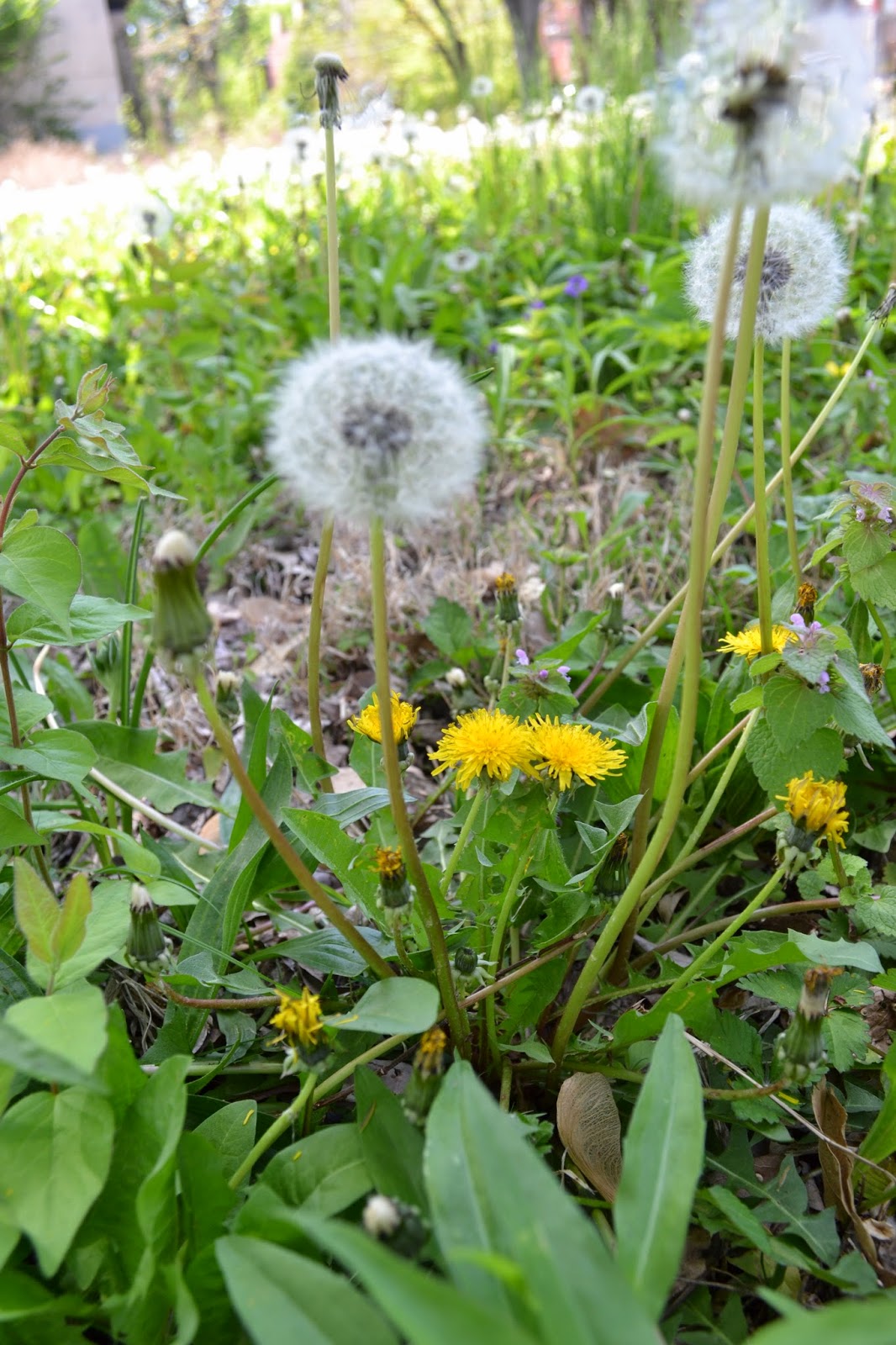
Health benefits of dandelion leaf and root.  Dandelions contain vitamins A, C, K, minerals, and flavanols

The nutrient concentration abilities of the dandelion make it one of the worlds best foods nutritionally.  That's why you might even see dandelion greens sold in your local organic market.  This always makes me chuckle a bit because this would be one of the easiest plants for people to grow and use and yet they are paying beaucoup bucks for it a premium stores.  If you live in a condo and have no soil to grow in you get a pass, but if you've got a yard then for heavens sakes stop applying herbicide and enjoy the health enhancing dandelions that will grow abundantly for you with absolutely no care and maintenance.  Ignore them and they'll be fine.  Water them and they'll flourish.

The prevalence of greens in the spring is something I've seen many raw and locavore food enthusiasts discuss.  Rhythmically it makes sense.  In the winter one generally is eating a lot of preserved, starchy, and heavy foods.  This would have especially been true in years past when we weren't shipping fresh foods in from South America in the winter.  This can make the body and metabolism sluggish over time.  Spring greens give the body a chance to detoxify, and dandelions are particularly adept at this particular function.  They have compounds proven to cleanse the liver, stimulate bile production, and pull heavy metals from the body.  They're very nutritionally dense as well, and an influx of vitamins is a huge boon to our bodies as we enter a very active, sunny season.

Vitamins and nutrients in Dandelions:
  • Beta-carotene - Dandelions is the plant kingdom's richest sources of Beta-carotene which is then transformed into Vitamin A in your body.
  • Iron - A serving of dandelion greens contains just as much iron as spinach
  • Vitamin K - Dandelions have 535% of your Rda of this fat soluble vitamin.  It contributes to good blood flow and healthy blood vessels and may help to reduce bruising.  
  • Vitamin C - Antioxidant and anti-aging
  • Minerals - Dandelions contain potassium, calcium, magnesium, and phosphorous.  The root is a particularly potent spot for mineral concentration.
  • Vitamin B6, Thiamin, Riboflavin
  • Protein - Dandelions are a surprisingly good source of protein, comparable
  • Tof-CFr - A glucose polymer found to act against cancer cells in mice.
  • Pectin - This forms ionic complexes with metal ions, making it a prime compound of use in detoxifying the body of heavy metals.
  • Coumestrol - An estrogen mimic that can help stimulate milk flow and balance hormones.
  • Apigenin and Luteolin - These are flavonoid glycosides that have diuretic, anti-spasmodic, anti-oxidant, and liver protectant properties.
  • Taraxasterol - This may contribute to liver and gall bladder health.

For more details on many of these and further list see this fantastic article on the Leaf Lady.

Find percentages of daily values in this nutritional breakdown of dandelion greens.

To harvest dandelion from a wild place or your yard make sure you know the area hasn't been sprayed.  If you're harvesting for leaves young plants will be the most tender and least bitter.  If you want the root then look for mature plants early in the spring.  They've stored nutrients in their root and that makes it a potent time to harvest.  The soil is also loose from frost and will make your digging or pulling easier.  If you have packed soil you'll need a trowel to dig in and loosen it before you lift.  Pull from the base so it doesn't break off at the leaves.

Once you've got your roots and leaves clean them up.  The roots should be chopped and dried in a dehydrator or on a pan or screen in a spot with good air circulation.  It may take 3 to 14 days for complete air drying.

If you want to make dandelion "coffee" which is roasted then you can dry and roast the root at the same time.  Place the well-chopped root on a pan in the oven at 250F.  Place the oven door ajar to let moisture escape if you have a lot of root on your pan.  A single layer is best and will roast most evenly.  Stir periodically to prevent burning and to keep everything roasted consistently.  The root will shrink considerably as it dries.  As it gets dry watch it most closely toward the end as it can burn fast once there is no moisture left in it.  The root will be a nice medium brown color when finished.

How to prepare dandelion leaf and root to use for dandelion smoothies, dandelion tea, and dandelion coffee

To use dandelion greens you can incorporate them into salads and smoothies.  The vitamin content will of course be highest if you eat them raw.  The vein of the leaf is where a lot of the bitter flavor is so if that bothers you it is possible to strip the delicate leaf part off the vein, but of course that is a lot of work.  If you chop them very fine and mix them thoroughly with your chosen dressing prior to adding them to the salad this will help mask bitterness.  To put them in smoothies just substitute them for any existing greens in the recipes you have on hand and blend away!

Of course I'm a big fan of eating for beauty, and all the nutrition in dandelions is going to definitely take great care of your skin.  Detoxing your body and aiding your digestion will also be of huge help for your appearance.  The better you digest the more nutrients your body can use from the foods you eat.  

We all want that inner glow which unfortunately becomes impossible if your digestive system isn't functioning well or is building up chemical metabolites.  Unwanted chemical burden builds up in our bodies from exposure to environmental pollutants, pesticides, plasticizers, synthetic personal care, paint and coatings, and preservatives and additives in foods in addition to other sources like prescription medications.  The liver does a big job of metabolizing foreign substances and enzymatically transforming them into compounds that are less harmful or can be excreted.  Over time the byproducts of this process can build up in the body due to the liver being overworked and sluggish, or due to inefficient elimination.  Even your body's own hormones are filtered through the liver.  Therefore if your skin is having a hormonal acne freakout your liver might be someplace to spend some TLC.

All this makes dandelions even more exciting because they support the healthy function of your digestive organs *and* detox your system.  Hello glow!

But it doesn't stop there.  You can put them on your skin as well for healing benefit.  An infusion of dandelion root yields a plethora of hydration balancing potassium and trace minerals.  Minerals are one of the most overlooked components of good skin hydration and function.  Most lines can talk your ear off about their vitamins and antioxidants but completely leave out minerals.  Blissoma has made sure to use mineral rich herbs and seaweeds in many of our products. They help regulate the water in the skin so you don't get puffy but still have comfortable hydration in all the right places.  Dandelion is a wonderful source of potassium which is one of the most helpful electrolytes for maintaining good skin hydration and barrier function.

Benefits of dandelions for your skin.  Minerals in dandelion root hydrate skin and help it function well.

The inclusion of minerals is one reason our recipes like Peace Evening Facial Creme and Amend Antioxidant Lotion can be light and absorbent and yet so effective at helping the skin maintain good moisture levels.  It's not just about the oils.  This is also why we believe in products that contain water as well as oil. (Though we do love our oil serums!)  Some folks may complain that products containing water are a waste of your dollars.  The fact remains that minerals and many phytonutrients like the anti-inflammatory compounds and flavonoids in herbs like dandelions cannot be carried by oils.  Minerals especially are water soluble and must be delivered through good old H20.  So if you're using products with good quality, water-based herb extracts like our Tone Intense Hydration Tonique (which also includes dandelion and other soothing herbs) you're still getting all kinds of beneficial compounds - it's so much more than just water.
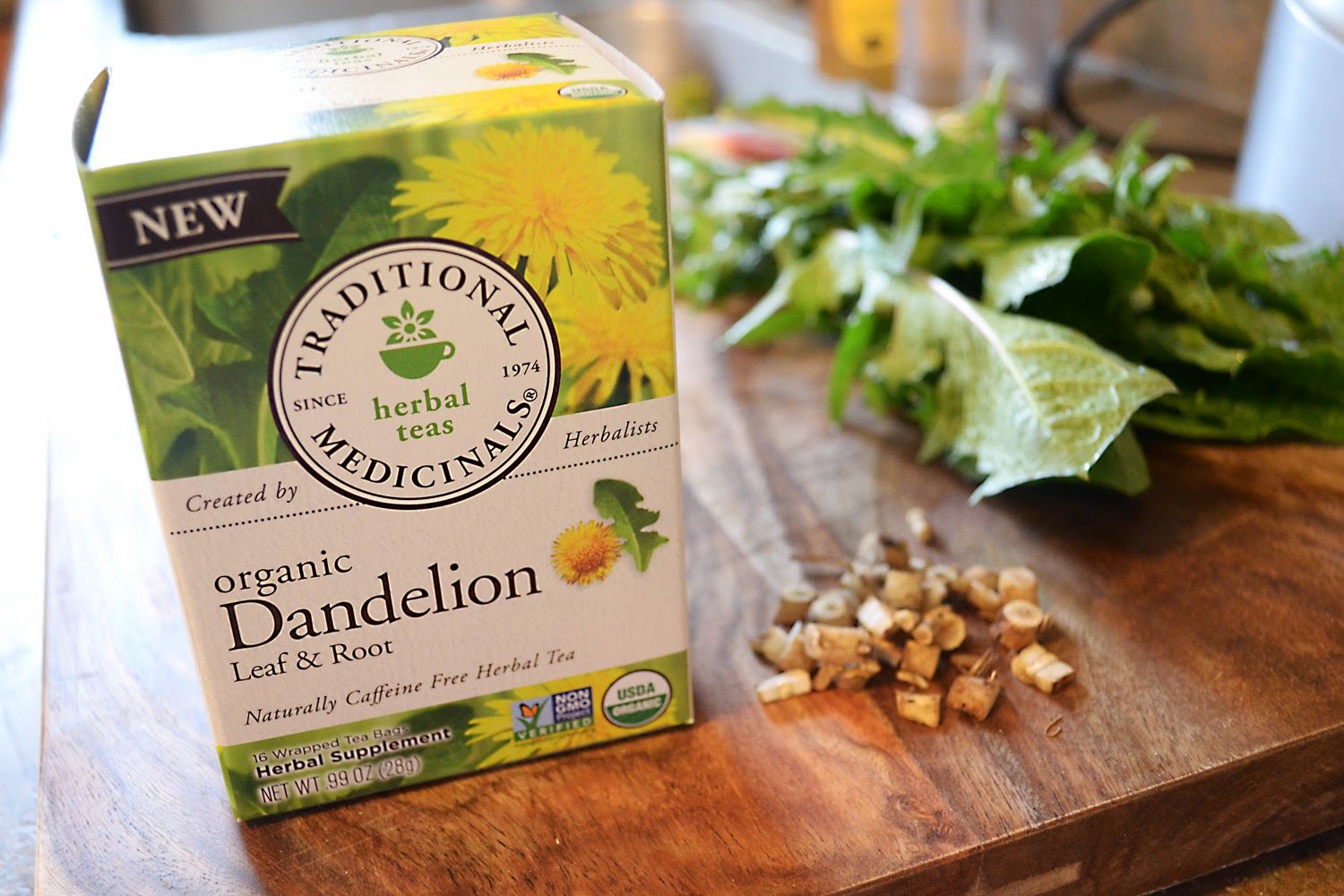
Traditional Medicinals Dandelion leaf and root tea.  Get the health benefits of dandelions from drinking a daily cup of dandelion tea.

If you can't gather wild dandelions then one great way to get them into your system is by drinking dandelion teas.  Traditional Medicinals makes several good dandelion teas that are delicious to sip and will help support your digestive health, hormonal balance, and beauty of your skin.  I highly recommend the raw, unroasted Dandelion Leaf and Root Tea for daily consumption.  It's mild and almost sweet and super easy to brew - just pop the tea bag in hot water, wait 10 to 15 minutes and drink your dandelions down.  

The organic Everyday Detox Dandelion Tea features dandelion leaf and root as well as fennel, peppermint, and licorice.  I personally love that anise-like flavor of the fennel and this blend is nicely done.  One benefit to supporting a product like these is that they are Certified Organic, which means no doubts about toxins if you don't have a field near you that you're sure isn't polluted with pesticides or other problems. 

To celebrate the fabulous qualities of dandelions I also made a video on how to gather and use them.  They're everywhere in the field that hosts Blissoma's community garden project and I'll never have to worry about having enough of my own - it's guaranteed abundance.


Smile when you see that little yellow "lion" flower emerging defiantly from your lawn.  Now you know all the good things it can do for you.
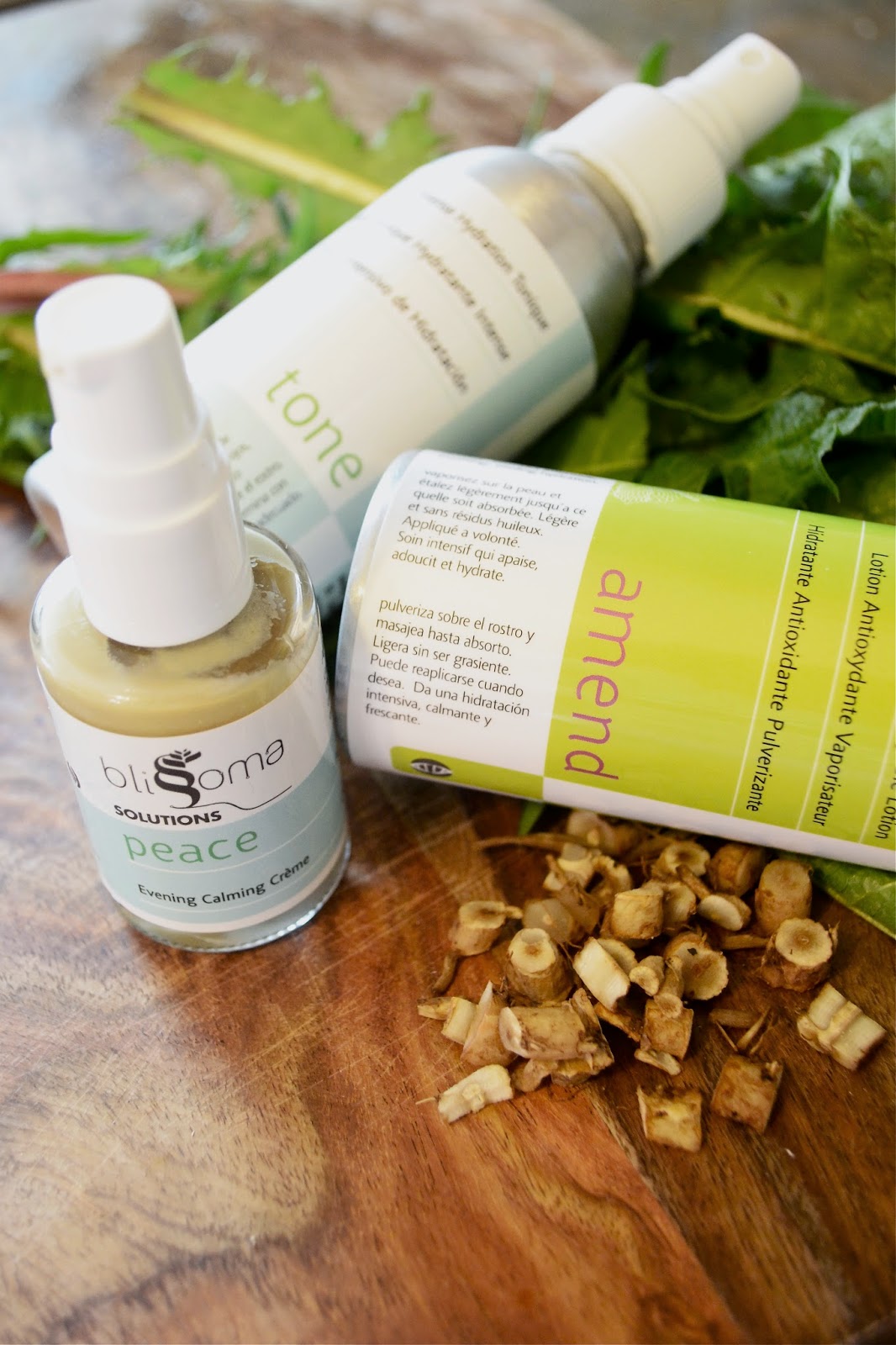
Dandelion root skincare by Blissoma to hydrate and balance skin.  Calming moisturizers for face and body.  Vegan natural skincare.
Note - Traditional Medicinals kindly provided me samples of their teas to evaluate.  I was not paid for my mention of them and all opinions are solely my own in the interest of helping people easily incorporate more healing plants into their routines.


Tuesday, March 18, 2014 in , , , , , , , , , ,

Mango Juicie Recipe - an anti-inflammatory treat


In fall 2012 I received a lovely note from a local esthetician named Lauren.  She wrote of her interest in natural and holistic skincare and how she'd love to help Blissoma out in some way.  In the following months Lauren and I worked local demos together and had time to chat inbetween client consults.  She was in the middle of a lifestyle transition prompted by persistent health issues.  Like many chronic problems it took some months and multiple doctor visits to sort out, resulting in a rebooted dietary approach that was friendly to her particular needs.

Flash forward to 2014 and she is now employed as our staff esthetician.  As a part of her own health journey she has done a lot of juicing with fresh fruits and veggies and wanted to share her own version of a recipe she tweaked from the Low Histamine Chef.


The juice recipe is heavily celery based.  While celery may seem simple as a veggie I can assure you - it's not!  While other veggies often get the accolades celery is there quietly providing 13 phenolic antioxidants, a sweet dose of Vitamin K, and lots of minerals.  Celery's powers include anti-inflammatory benefits for the cardiovascular system.  It can prevent oxidation of body fats and blood vessel walls.  For those with sensitive stomachs celery also has pectin based polysaccharides that have been shown to improve the integrity of the stomach lining and help control stomach secretions.


Also notable is the fun inclusion of radishes!  They add a unique flavor that blends really well with the celery.  Just a little fresh kick to wake your palate up in the morning.


Mango Juicie (smoothie+juice=juicie)
this makes about 2-3 servings, use half of the veggies if wanting 1 serving

1 mango
1 bunch of Kale (any kind, or if you aren’t a fan of kale a head of romaine works too)
1 bunch of celery (approximately 8 good sized stalks)
1 bunch of radishes (approximately 6 or 7 average round radishes)
1 green apple (optional for a little more sweetness)

*if you have a centrifugal juicer the leafy greens can be omitted in favor of a cucumber.  Romaine often goes through a centrifugal fine but with kale it isn't as efficient.


Directions:
Juice everything but the mango. Peel the mango and puree it. Add green juice to mango puree and mix!


This is a low sugar, incredibly skin-friendly recipe that tastes great.  Why is low sugar important for your beauty results?  Read how sugar is aging your skin and you'll feel even better about this juice choice.


Tuesday, April 23, 2013 in , , , , , , , ,

Adventures in Raw, Vegan, and Grain-free Food - Raw "Doughnut" Dessert Balls and "Cheezy" Kale Crackers

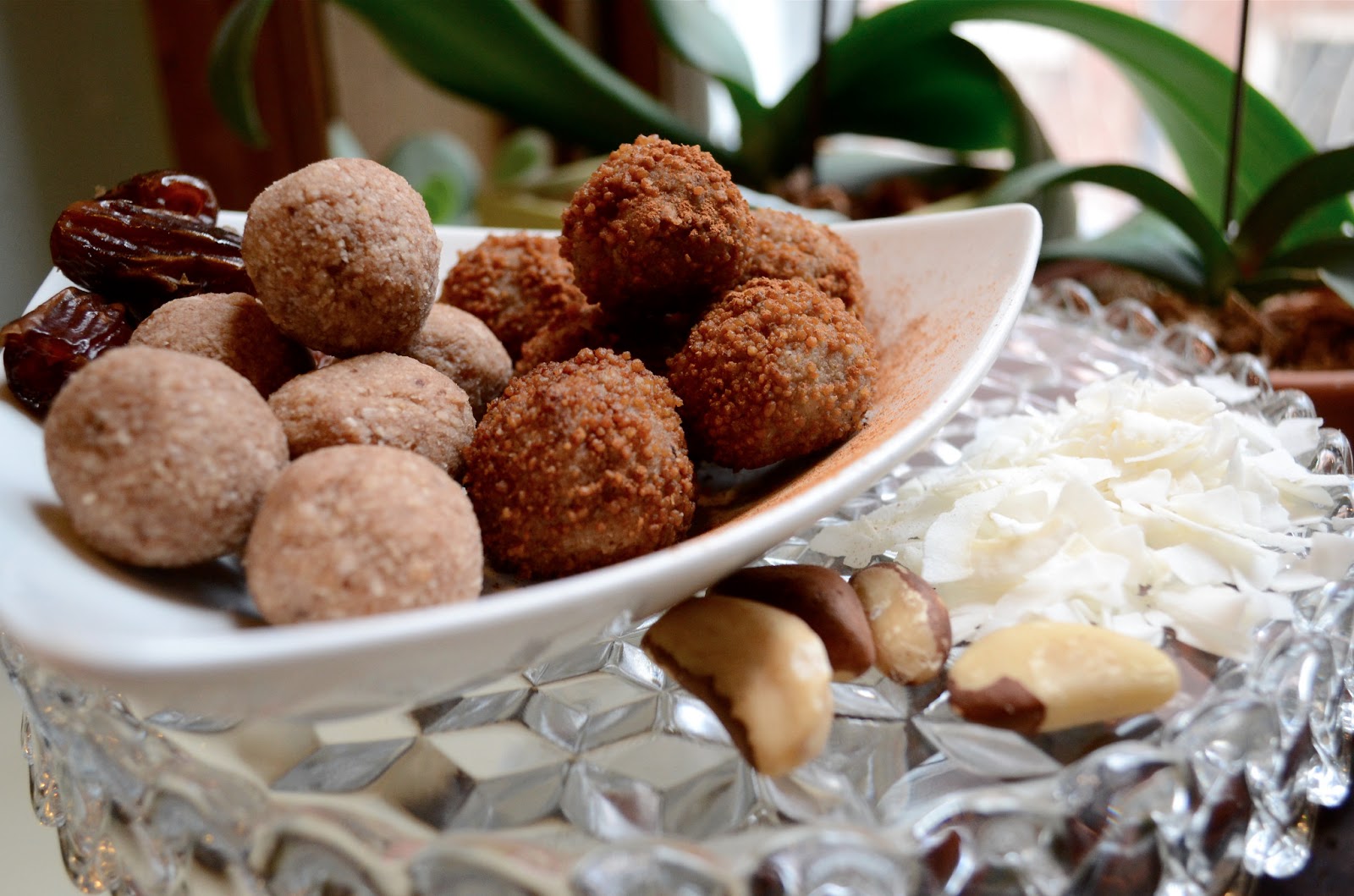
raw vegan doughnut hole dessert balls - healthy sweet treats

I often take my mad scientist leanings into the culinary arena.  It's where I started a journey towards mixology in my childhood with experiments in scratch-made Saturday breakfasts and a predisposition for anything messy.

Several years ago when my family was on a squeaky tight budget cooking came even more to the forefront of my daily life.  Boxed and frozen food "starters" can be surprisingly expensive to purchase and need dictated that I resort to buying the basics in bulk.  This was the genesis of my giant jars of rice, beans, a cabinet full of spices and many hours in the kitchen.  Freshly laden with a mortgage and with a recession on strong there was no money for nights out on the town - no movies, no drinks, and no restaurants.  I might have felt trapped but instead to keep myself occupied and spirits up I spent my Saturdays and Sundays cooking enough food to keep the family steady for the busy week to come.  

Cooking during this time felt empowering.  It was something I connected to not only creatively but also gave me a small corner of the world where I had a reasonable chance of success.  The wide world might be chaotic and bills might be suffocating me but the assurance of a tasty batch of baked beans had me glued to my oven, watching as they simmered for hours.


Julie and Julia movie making chocolate pie
photo courtesy Julie and Julia
I think of the movie Julie and Julia where it is said, "I love that after a day when nothing is sure, and when I say 'nothing' I mean nothing, you can come home and absolutely know that if you add egg yolks to chocolate and sugar and milk, it will get thick.  It's such a comfort."


This comes back to me often as I'm hovering over my stove watching a recipe come together.  Food for me is always an interesting mix of daring and repetitive.  Once you have some basics down you can generally venture forth and start throwing things together with some reasonable assurance it will come out all right.  It has the alluring quality of living on the edge with all the safety of knowing that the worst that may happen is something will get dumped down the drain, a minor consequence in a world filled with far scarier ends.  Bravery can be practiced as you fiddle with flavor and confidence gained.

The most exciting thing about alternative dietary practices like raw, vegan, and grain-free diets is the fact that they completely blow the hinges off the structure that is conventional American cooking.  Think you really knew something?  Get ready to be a beginner again.  The ingredients and combinations are completely different.  This isn't just adding lemon flavor to a cake and feeling novel, it's reinventing the very flour from which the cake is made, the entire structure, and whether you bake it at all.  While to some this might seem daunting to me it is the very thing that makes it fun.  I love "first times" and the improvisational feel.  The thrill of not knowing what will happen is the very reason to show up.  I do this dance with the known and the unknown in cooking all the time, choosing each day whether I want a foray into foreign territory or another rendezvous with an old friend.

While I don't have a stringent need to eat dairy or grain free it is enjoyable to practice these guidelines on occasion to experiment with flavor and test boundaries.  Rather than feeling like restrictions it instead resonates as just a separate palette.  We've actually been missing a lot by sticking to our grain and dairy staples and I enjoy forcing myself to see what works in this new realm.

For a sales event lately I made some raw, vegan, and grain free snacks as hospitality.  People raved about them.  When I served them again at my daughter's birthday party a week later the response was the same.  They are different, but they are tasty!  With the right recipes and flavors there is no sacrifice to eating nutrient rich foods.

"Doughnut" balls have been popping up on raw blogs for months and I had been meaning to try them.  The 2 types I made give an option with nuts and one without.  Grain free and raw recipes tend to be heavy on nuts but I didn't want to exclude those who had nut problems.

And if we can say anything about me it is that I am a cracker fanatic.  I figured if I could find a cracker that would satisfy my urge for savory crunch I'd be doing myself a favor.  Enter the "cheezy" kale grain-free crackers...

Two of the base recipes were found courtesy of Rawmazing, who lured me in with her beautiful photography, because a delightful picture of food is almost as good as eating - almost.  I tweaked both recipes, though, and so the versions I am posting here are revised.  You can visit her site to get the original versions and of course offer her some kudos on her amazing work.  I prefer my updated versions and my guests were also hooked, so I wanted to post the changes I made.

I ended up adding water to both of the "Doughnut" ball recipes I found.  Both were too dry and flaky without it.  The addition of water means you may wish to store them in the refrigerator, but made them so much more soft, tasty, and easy to eat and store.  Anyone who ate raw cookie dough as a child (or as an adult) will adore these dough balls.  They have all the allure of unbaked cookies and far less guilt.
 
raw vegan dessert, healthy doughnut holes or sweet energy balls


Raw Vegan Vanilla "Doughnut" Balls

Ingredients:
30 Medjool Dates
2 Cups of real Dried Coconut Flakes (unsweetened, natural coconut)
2 tsp Vanilla Extract
1 pinch fine Sea Salt
2 Tbsp Grade B Maple Syrup
2 Tbsp water + more as needed

Instructions: 
Put all ingredients but water into a food processor and let the machine run until the mixture is crumbly.  Add water and run until it looks like cookie dough.  This may take a while for the coconut to break down into small enough pieces, so run and scrape the sides as needed and then run some more.  Add a bit more water if the "dough" is not sticking together well enough.
Spoon up approximately a Tablespoon of "dough" at a time and roll into a ball.  Serve and eat them room temperature or chilled as you like.  Store in the refrigerator.


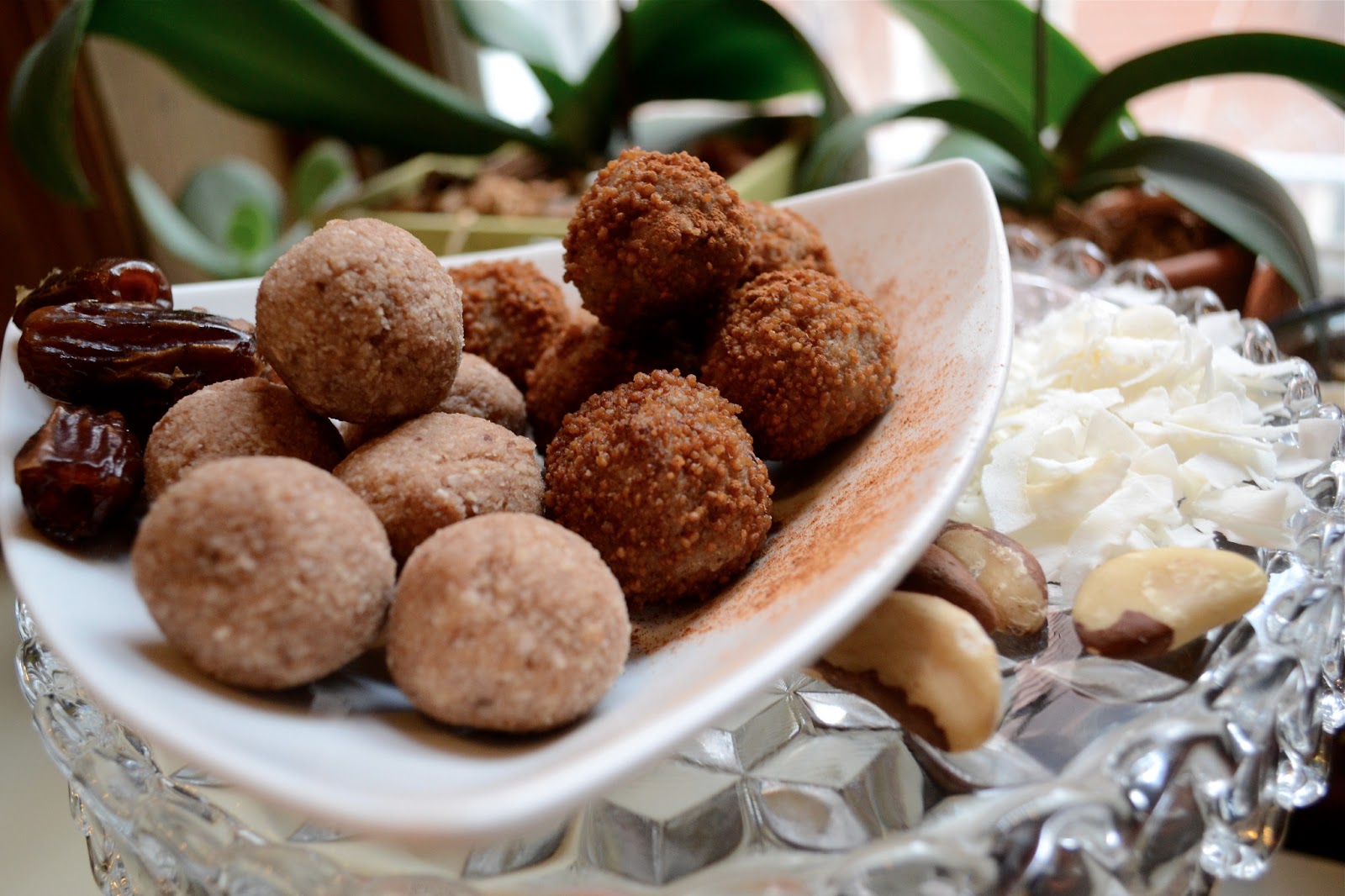
raw vegan brazil nut doughnut holes with cinnamon and sucanat, healthy dessert or snack


Raw Nutty "Doughnut" Holes 

(modified from the Raw Doughnut Holes recipe on Rawmazing)

Ingredients:
2 Cups Brazil Nuts
1 1/2 Cups Oat Flour or Raw Flaked Oats
1/3 Cup Coconut Oil
1/3 Cup Grade B Maple Syrup
1 tsp Cinnamon
1/4 cup water, added slowly

Topping: 
1/3 cup Sucanat
1 1/2 tsp Cinnamon

Instructions:
Place Brazil nuts and oats in the food processor.  Run the food processor until the Brazil nuts are finely chopped and the oats are finely powdered.  Add the oil, syrup, cinnamon, and water and blend thoroughly until the mixture resembles cookie dough. 
Spoon up approximately a Tablespoon of "dough" at a time and roll into a ball. 
Combine the topping ingredients and roll each ball in the sucanat/cinnamon blend.
Serve and eat them room temperature or chilled as you like.  Store in the refrigerator.

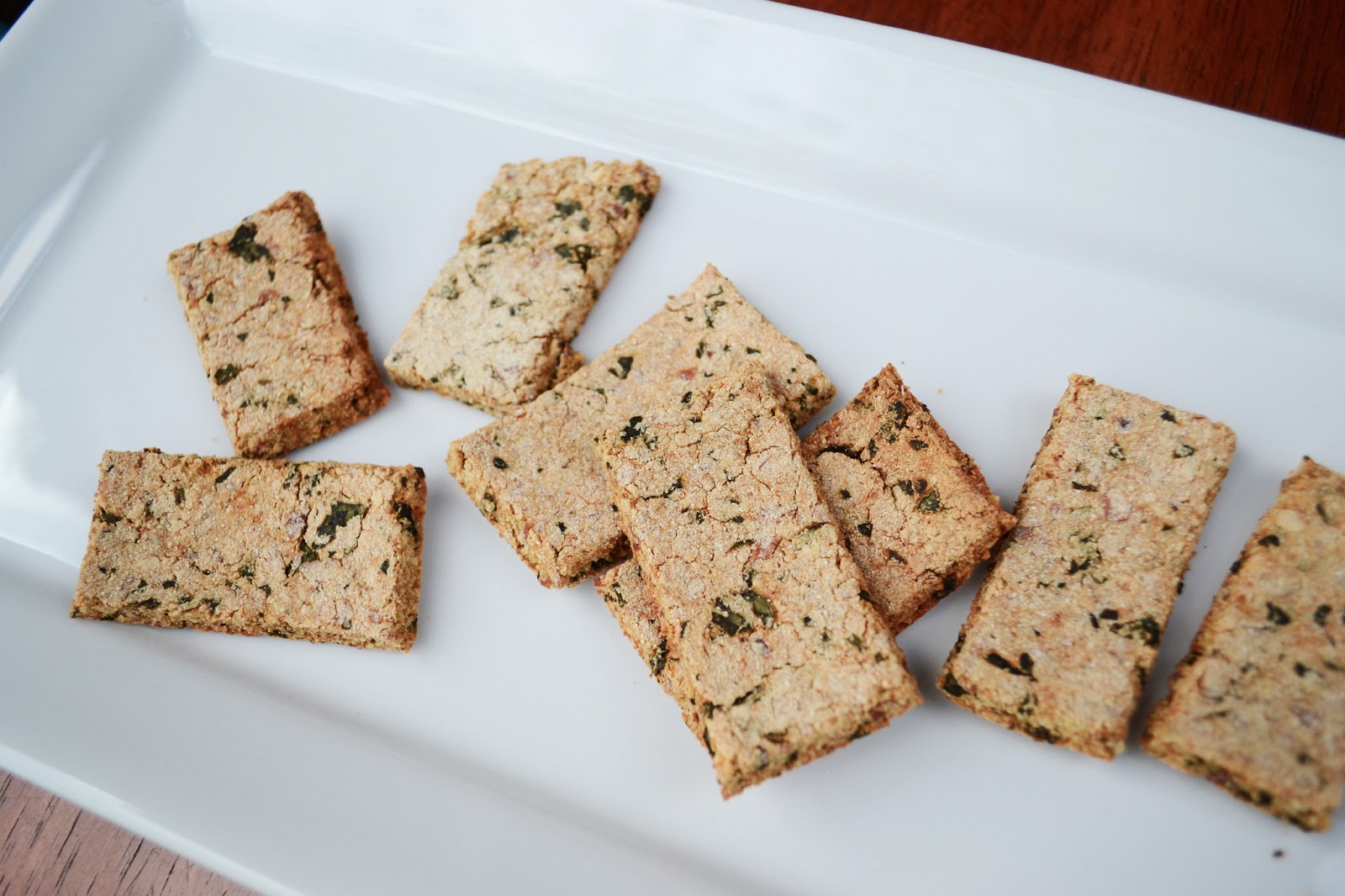
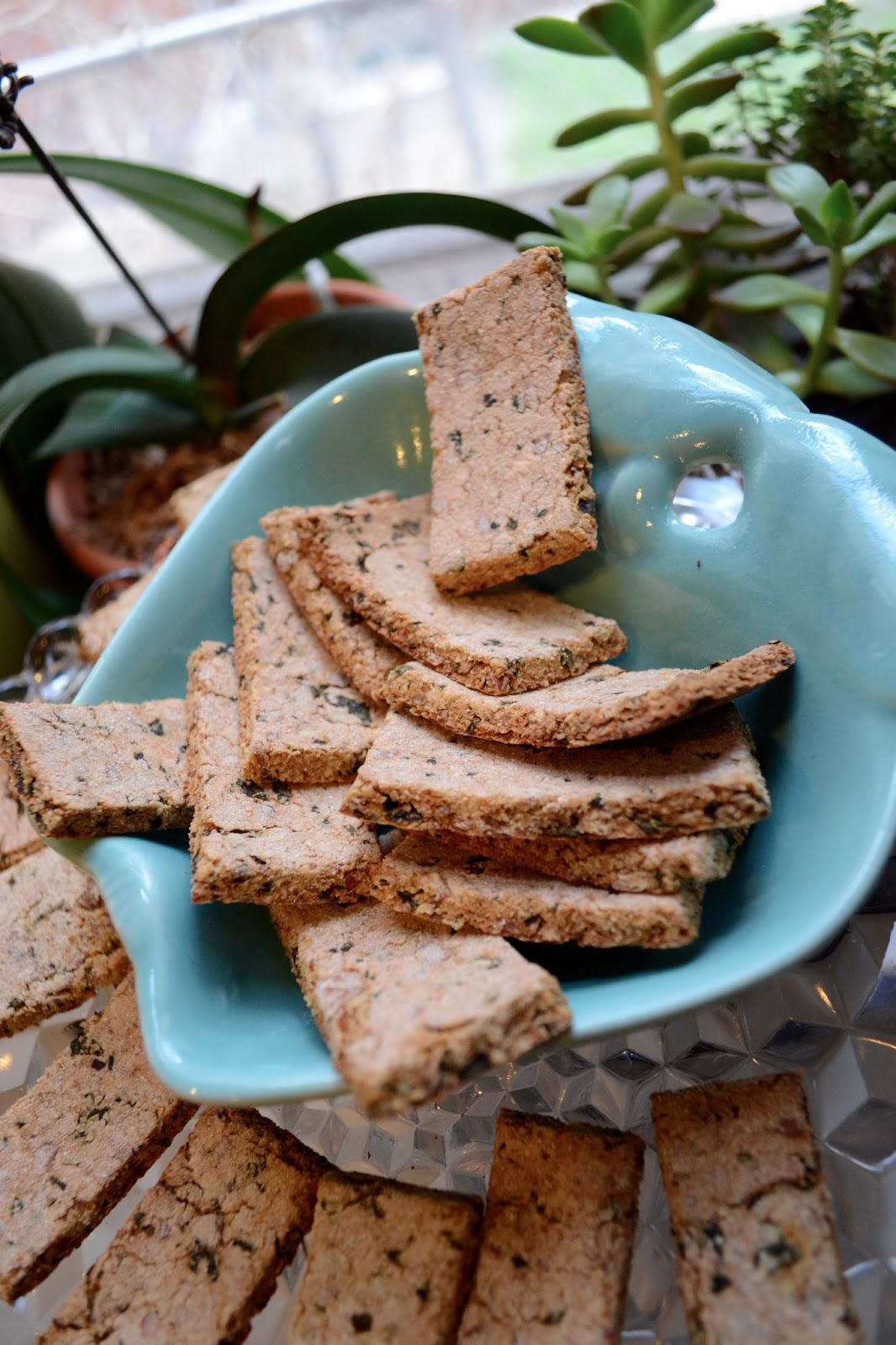
vegan cheezy kale crackers for healthy snacks, grain and gluten free

"Cheezy" Kale Almond Crackers 

(modified from the Cheezy Kale Almond Crackers recipe on Rawmazing)

I adjusted the amount of water, spices, added garlic and created my own baking strategy.  These can be dehydrated in order to be completely raw but I had only an oven and a more limited amount of time (and a LOT of crackers to produce).

Ingredients:
1 cup ground Flax
1 1/2 cups water
2 cups Almonds, soaked overnight, drained and rinsed
1 bunch Kale (I used Lacinato/Dinosaur Kale and really only put in about 3/4 of a bunch)
1 cup Coconut Flour
3/4 cup Nutritional Yeast
2 tsp Chipotle
2 tsp Paprika
1 tsp garlic powder
Salt to taste

Instructions:
Mix together ground flax and water.  Set aside.
Place soaked almonds in food processor and run until finely chopped.  Remove to a large bowl.
Wash and de-stem kale and place leaves in the food processor.  Pulse until finely chopped.
Add nutritional yeast, coconut flour, paprika, chipotle, and garlic powder to the chopped almonds.  Mix well.  Stir in kale.
Add flax and water mixture.  Mix with a sturdy spoon or with your hands until thoroughly combined.  Add salt and taste test to determine the level you desire.
Preheat the oven to 225 F.
Lay out a sheet of aluminum foil the same size as a baking pan.  Scoop out a ball of dough and press to shape into a thick rectangle.  Dust with coconut flour.  Roll the dough out to approximately 1/4 inch thick and rectangular on the foil, pressing the dough together to make it stick to itself.
Use a pizza wheel to cut crackers in the size you desire, slicing off the loose, crumbly edges if you like.  Slice lightly through the dough as to not cut the foil beneath.
Pick up the entire foil and transfer to a baking sheet without disturbing the crackers.  
Bake at 225 F for 2+ hours until fully crispy and no softness remains.  Check periodically to gauge progress.
Remove from the oven and cool on the baking sheet.  Once cool peel the crackers off the foil and put in a tin to store.

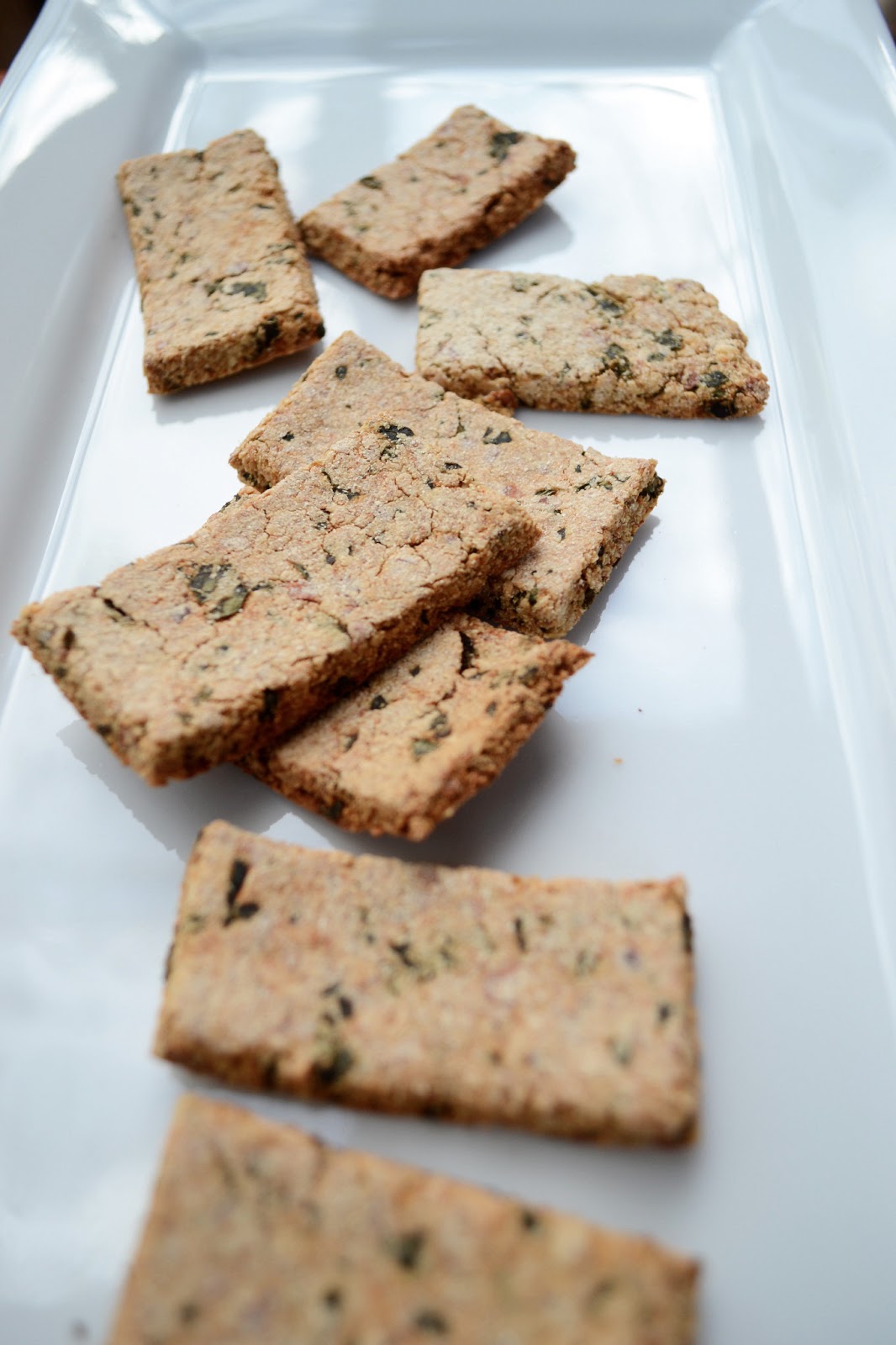
vegan cheezy kale crackers for healthy snacks, grain and gluten free

vegan cheezy kale crackers for healthy snacks, grain and gluten free, healthy crackers, grain free cracker


What a fantastic way to get your flax and kale in!  These crackers are great with hummus and other dips or stand alone perfectly well.  My sincere compliments to Rawmazing's Susan Powers for a lovely recipe concept.  I'm going to be continuing to follow her blog for more food adventures and gorgeous photos.

These three recipes are friendly to your skin as well, providing a boost of nutrients, minerals, healthy fats and only a moderate amount of sugar in the "doughnut" holes.  Snacks and desserts can be good for you and your looks if you step outside the plethora of processed options at the store.

Here's to your health!  Hopefully you'll have some fun in the kitchen and give these recipes a try.


Tuesday, March 12, 2013 in , , , , , , , , , , , , , , ,

Cooking with Essential Oils - A Complete Guide to the "Essence of Flavor"

Photo by Jonathan Gayman
Most people have never cooked with essential oils either due to lack of familiarity, lack of access, or the common repetition by many aromatherapy sources that say not to ingest them.  One secret of the food industry is that essential oils are used ubiquitously in packaged foods as a source of extra flavor.  Anyone consuming canned, frozen, or even boxed foods is almost assuredly already eating essential oils and a large list of essential oils is approved by the FDA for consumption as safe.  While they are potent, and best used with care my personal feeling is that people are missing out on an amazing sensory experience skipping these ingredients in their cooking.  

To help you venture into the world of essential oils for your home cooked meals I put together a complete guide to cooking with essential oils with the help of Feast Magazine St. Louis.  Armed with a little knowledge you can begin to have all kinds of exotic flights of flavor fancy.  The story below includes links to 6 recipes I created from scratch for the article to help you make 4 complete courses all devised for maximum aromatic impact.  Enjoy, and please let me know if you try them!

From Feast Magazine St. Louis, February 2013 
Essential oils are most commonly associated with candles, fragrances and beauty products. However, the volatile oils produced by plants, their roots and their fruits are the building blocks upon which we create flavor in cooking. We grind herbs in a mortar and pestle when making vinaigrettes to extract the rich oils. We zest lemons and limes for the concentrated flavor found in the oils of their skins. So why don’t most people cook with bottled essential oils? Many oils available on the market aren’t intended for consumption. But seek out those essences made for cooking and you’ll open your kitchen to a whole new world of flavor.

Cooking with essential oils is simply another way to season dishes, much like using spices and herbs. But they bring with them a number of benefits. Most notably, the concentration of flavor. Oftentimes just one drop of essential oil is enough to infuse an entire dish with flavor. No picking, peeling, chopping, grinding or grating necessary. The distiller has already done all the work for you by presenting the volatile oils in their straight form. And unlike with dried herbs or ground spices, shelf stability isn’t a concern. Essential oils are not vulnerable to bacteria and don’t go rancid like vegetable oils might. Some oils can change a bit over time or oxidize, but in general, essential oils keep for years.

If the oils are purchased from a reliable source, quality and freshness of flavor are unmatched. Essential oil suppliers grow specific varieties of plants and use the best growing conditions to maximize the aromas in the plants they harvest. The plants are sent straight to distillation to capture their true profile, and distillers are careful not to compromise the quality of their oils with heat or other factors. In addition, one can access varieties of plants and unusual flavors that are simply not available in other forms. Neroli, for example, is the bitter orange flower. It’s very famous in perfumery and is only available as an oil. Bitter orange flowers are not sold for use, and even if they were, the aroma is so delicate and transient that by the time the blossoms reached you it would have deteriorated.

So how do you begin working with these intense and intriguing oils? Start by substituting them for the herbs and spices in your favorite recipes, keeping the following guidelines in mind.
Essential oils are oil-based and will dilute well in alcohol, vinegars, oils and fats. These elements need to be present in the recipe you’re using. Foods that are naturally rich in fat, such as dark or rich meats, fatted dairy products and coconut milk, work well. Starchy vegetables, beans, lentils and grains can also distribute the oils well enough if they’re also blended with a little cooking oil. Stews and chunky, thick soups are a good place to start, and dips, pestos and creamy sauces are the perfect testing ground for working with essential oils.

Essential oils are quite potent. If following a recipe, you can use the ratio of 1 Tbsp dried herb = 3 Tbsp fresh herb = 1 drop essential oil. If you need to use less than one drop in a recipe, dip a toothpick in the oil and swirl it into the dish. Essential oils can also be diluted with food-grade oils. Create 50 percent, 25 percent or 10 percent dilutions for use in smaller batches of food. If you’re experimenting on your own, start slowly by adding one drop at a time. Taste the dish and adjust the seasoning based on your preference.

Essential oils will “flash off.” With extended heat, so using them in cold applications is a wonderful way to get the maximum benefit. Using a small amount in olive oils and vinegars as a final dressing to foods works well. If using them in soups and sauces, add them at the last possible step, when heat exposure is minimal. Baked goods obviously will be exposed to heat, so some loss may occur. Consider increasing the amount of essential oils used in baked items to ensure the final product will still have lots of flavor.

Tips are included in the link to Feast's website including a list of good oils to start with and ones to avoid to help guide you through cooking with essential oils.   Visit their site to see my list of recommended and favorite oils.

And, check out a collection of recipes linked below that feature a variety of essential oils in a number of applications.  Each recipe was devised by myself through my 10+ years of experimenting with oils in my herbal studio and home kitchen.  Flavor is really my strength and while I may not have all the skills of a gourmet chef I can season a sauce and achieve something that will really please a palate.  Several recipes are vegan and numerous are gluten-free for my followers that pursue alternative food lifestyles.


Photo by Jonathan Gayman
Triple Celery Soup (Vegetarian and Gluten-Free)
This delectably creamy soup offers a full, savory taste built on a bevy of veggies. Celery root, celery stalks and potato make a satisfying base, while white wine and apple lend a pleasant sweetness in the mouth. Celery leaf extract, parsley and the unusual touch of star anise create an aromatic treat that will have you taking your bowl back for seconds.

Coriander and Pink Pepper Flatbread (Vegan and Gluten-Free)
These crunchy flatbreads don't disappoint. Whole spelt flour creates a healthy base for a subtle but insistent blend of coriander and pink pepper. Horseradish loses its bite in the baking process but provides a full, mellow undertone.

Whiskey, Fenugreek and Fig Balsalmic Chicken Wings
Take wings in a sophisticated direction with a smoky, spicy marinade and syrupy molasses and balsamic reduction. The whole dish will have you smacking your lips and licking your fingers for the last drops of the delicately flavored sauce. Jicama sticks soak up the sweet stuff and offer a clean, satisfying crunch between bites of fragrant meat.
 
Cumin, Apricot, and Grapefruit Braised Winter Vegetables (Vegan and Gluten-Free)
This tasty vegetable dish is thoroughly infused with the bright flavors of apricot and grapefruit, which contrast nicely with earthy cumin essence and saffron. It's an unexpected combination but an irresistible one.
Photo by Jonathan Gayman

Raspberry, Rose, and Neroli Coconut Ice Cream (Vegan and Gluten-Free)
A dairy-free, rosy dessert that cleanses the palate and offers an inviting combination of fruit and precious flowers. Super-simple preparation but a big wow factor for flavor. Altogether a singularly intriguing and elegant dessert experience.


Rose, Ginger, and Assam Tea Cookies (Vegetarian)
These turbinado sugar-topped cookies offer a crunch that makes a delightful companion to ice cream. The decadent Ginger Aftelier Chef's Essence dominates on the tongue with a hint of rose otto flitting about in the background. This buttery, classy take on a shortbread makes fine friends at a luncheon or tea or as a snack or dessert.

Following is a list of essential oils used as food flavorings that are GRAS by the FDA.  See the original list including latin names on their site.

Alfalfa, Allspice, Almond - bitter (free from prussic acid), Ambrette seed, Angelica root, Angelica seed, Angelica stem, Angostura (cusparia bark), Anise, asafetida, Balsam of Peru, Basil, Bay leaves, Bay (myrcia oil), Bergamot (bergamot orange), Bois de Rose, Cacao, Chamomile flowers  (Hungarian, Roman, and English), Cananga, Capsicum, Caraway, Cardamom seed, Carob bean, Carrot, Cascarilla bark, Cassia bark (Chinese, Padang, Batavian, and Saigon), Celery seed, Cherry wild bark, Chervil, Chicory, Cinnamon bark (Ceylon, Chinese, Saigon), Cinnamon leaf (Ceylon, Chinese, Saigon), Citronella, Citrus peels, Clary Sage, Clover, Coca (decocainized), Coffee, Cola nut, Coriander, Cumin, Curacao Orange peel, Cusparia bark, Dandelion root, Dog grass (quackgrass triticum), Elder flowers, Estragole (esdragol, esdragon, tarragon), Estragon (tarragon), Fennel sweet, Fenugreek, Galanga, Geranium (East Indian and rose), Ginger, Grapefruit, Guava, Hickory bark, Horehound, Hops, Horsemint, Hyssop, Immortelle, Jasmine, Juniper berries, Kola nut, Laurel (berries and leaves), Lavender, Lavender spike, Lavandin, Lemon, Lemon Balm, Lemongrass, Lemon peel, Lime, Linden flowers, Locust bean, Lupulin, Mace, Mandarin, Marjoram sweet, Mate, Melissa (lemon balm), Menthol, Menthyl acetate, Molasses extract, Mustard, Naringin, Neroli bigarade, Nutmeg, Onion, Orange bitter (flowers and peel), Orange leaf,  Orange sweet (flowers and peel), Origanum, Palmarosa, Paprika, Parsley, Pepper (black and white), Peppermint, Peruvian Balsam, Petitgrain (lemon, mandarin, and tangerine), Pimenta, Pimenta leaf, Pipsissewa leaves, Pomegranate, Prickly ash bark, Rose absolute, Rose otto and attar of roses, Rose (buds, flowers, fruit/hips), Rose geranium, Rose leaves, Rosemary, Saffron, Sage (officinalis, Greek and Spanish), St. John's bread, Savory (summer and winter), Schinus molle, Sloe berries, Spearmint, Spike lavender, Tamarind, Tangerine, Tarragon, Tea, Thyme (white, wild or creeping), Triticum (dog grass), Tuberose, Turmeric, Vanilla, Violet (flowers and leaves), Violet leaves absolute, Wild Cherry bark, Ylang-ylang, Zedoary bark

Questions?  Comment and I'll be happy to reply with answers to guide you.

Article originally published in the February 2013 issue of Feast Magazine.  Story and recipes by Julie Longyear, dishes prepared by Angela Komis. 
 

Monday, January 7, 2013 in , , , , , , , , ,

Chai - a Beautiful, Homemade, Healthful Brew


I'm as big a fan of drinking herbs as I am of slathering them on my face.  One of the nicest, warmest herbal treats for your tastebuds is a cup of freshly brewed Chai.  Packed with spices it's a healthy, aromatic pick-me-up for your entire body.

Now, if all you've had is those powdered Chai drink mixes from the store then please, I beg you, listen up and put that bagged imitation down.  While recipes authentic to India may be closely guarded there's nothing to stop you from crafting up something incredibly tasty in your own kitchen.
 
Why fresh spices?
Firstly, fresh is always better.  Period.  I figure you probably already know this at some level.  It's not hard to brew an amazing cup of Chai from fresh, whole spices and quality tea and it's even a fun process to blend it up.

The spices common to Chai have benefits for your body as well as tempting flavor.  Black pepper, ginger, cardamom, fennel, cinnamon... these are warming, clarifying spices that can stimulate your immune system, help with digestion, and give you an energy boost.  Black pepper alone causes your digestion to work more efficiently, has antioxidant and antibacterial properties, and speeds the breakdown of fat cells!  Cardamom is an aphrodisiac and let's just say that even smelling the freshly cracked pods while preparing your tea blend will have you feeling quite delightful.

Only fresh spices are going to offer you any health perks.  A dehydrated, processed drink mix has been stripped of all the immediate power the botanicals originally had.  Not only that but the powdered milk and excess sugar add an extra level of undesirable.  For health and taste fresh brewed is the only way to drink your Chai.
 

The Lighter Lifestyle
Traditionally Chai is always brewed with milk and sugar.  Since I advocate limiting both these things in your diet there are a few other tweaks to be made to the traditional Chai to make it fit your light lifestyle.

Plant milks are abundantly available at most grocery stores these days, and if you can't access any you can make your own almond milk easy-peasy with a little planning.  Whether you choose rice, coconut, soy, or almond milk you can get a hit of the creamy stuff you crave without extra hormones, cholesterol, and saturated fat.  Which in the end means you can happily drink more Chai. (and you'll want to!)

For sugar or alternative sweeteners I brew with a minimum amount, perhaps just a teaspoonful of sweetener per cup.  You can use less or go without if you are a sugar-free master already. 

Raw honey is my favorite choice for immune support.  All the extra enzymes, pollen and trace nutrients are a great boost for your system during cold and flu season.  Since I sometimes take this with my Echinacea tincture for regular protective benefits it's no big deal to reroute it to a cup of Chai instead.  Honey added during the steeping process will also help draw more flavor out of the spices as well.

If you want ultimate control then just add your choice of sweetener directly to each cup so you know just how much (or little) you are consuming.


Where to Shop
Since spices like cardamom can be kinda pricey at the regular grocery store or hard to find my recommendation is to take a little side trip to your favorite local ethnic grocery store.  Joy!  Delight!  Sensory stimulation!  A trip meandering among odd ingredients never fails to excite me for a day.  Bulk bags of spices that would cost 3 or 4 times as much at American grocery stores is the icing on the cake. 
Being the herb, spice, and tea-aholic that I am I have bags laying about for all sorts of various purposes.  Should any apocalyptic disaster hit I'll have Chai and spices to last several months in, no problem.

If you don't have a funky ethnic grocery store near you then ordering online is the most economical option. 


The Recipe
1 tsp whole or cracked black peppercorns
2 TBSP whole fennel seeds
1 tsp whole coriander seeds
1 tsp whole cloves
2 whole cinnamon sticks
24 whole green cardamom pods
2 TBSP powdered ginger
1/2 tsp ground nutmeg
1/2 cup loose black tea (Assam, Ceylon, or other quality, unflavored black tea)*

*Substitute Rooibos red tea if you would like a fully caffeine free tea


Directions:
Measure black peppercorns, fennel, coriander, and cloves into blender or food processor.  Pulse several times until spices are broken into large chunks.  Transfer to a bowl.

Put cinnamon sticks into blender and pulse until broken into small pieces.  Transfer to the bowl with other spices.

Put whole cardamom pods in blender and pulse several times to break pods open.  Transfer to the mixing bowl.

Add ginger, nutmeg, and tea and stir thoroughly.  By this time your nose should be buzzing and your mood should be lifted!  Transfer to a tin for storage. 


To Brew
1 cup water
1/2 cup plant milk of your choice (1/4 cup if you enjoy less creaminess)
1 TBSP chai spiced tea in tea ball or strainer
2 slices fresh ginger root (optional but a tasty addition)
Sweetener of your choice, Stevia, or skip it!

Boil water and add tea in the tea ball or strainer and your fresh ginger slices.  Remove from heat and steep for 5 minutes.  Add your plant milk and reheat until piping hot.  Pour into a cup and sweeten to taste as desired.

Drink to your health and beauty!  
Ciao (or should I say Chai) for now.  *wink* 


Wednesday, January 2, 2013 in , , , , , , ,

The Un-Resolution way to make Meaningful Changes

It's the day after New Year's Day, or, as I'm going to be thinking of it "Un-New-Year's-Day."
That's kind of like an Un-Birthday for those who know how Mad Hatters and March Hares operate.  There's a heck of a lot more Un-New-Year's-Days than there are New Year's Days but somehow we feel obliged to fit all our celebration and renewal into one solitary day.  Maybe you have to be mad to see the abundance of other days on which you could be evolving.  If so I'm quite possibly completely bonkers.  Just bonkers enough to think maybe you'd like to join me on this journey... 

Change is an ongoing process, and resolutions made because of an arbitrary date are, in my opinion, more of a psychological "out" and a way to make ourselves feel like we are addressing change rather than fuel for real, substantial evolution. Change is a constant process and should be embraced each day.   Just like an Un-Birthday you can have your Un-New-Year's-Day anytime.
If you only resolve once per year to get "better" that is perhaps only a few dozen changes you may make in your life, only some of which will actually stick. If you approach change (and really change is growth) as a daily pursuit not only are your changes more likely to stick but the progress that can be made is virtually infinite. The very practice of embracing challenges and new thinking each day prepares you to be successful at it each time you make a change in the future. You can be fluid instead of stagnant, a master changer, and greeting your full potential openly. 


If enlightenment is possible in a single lifetime then that is a big, but achievable mountain to climb.  Just think of the constant path you'll need to get there.  You certainly won't ever arrive at the summit by putting the climb off until tomorrow.

Come to your life with beginner's mind each day. Pick a corner and start nibbling away at the big things you want. Instead of making a resolution say "I'll just do this new thing for today."


Allowing yourself to experiment and practice a new behavior once or twice may make it less scary than resolving and "failing". Then the next time you just do it for a day it feels fulfilling instead of guilty and is associated in your mind with success instead of failure. 

You can find the things that nourish you by experimenting and experimenting again, gradually incorporating the things that work and eliminating the things that don't. 

Go completely mad with me. Let's be crazy!  Live in the now and let's Un-Resolve together.  Don't wait another whole year to embrace your desires.  After all it's Un-New-Year's-Day today and for the next 364 days.  That means it's time to celebrate some change, and you might as well celebrate it because some is on the way.  Love your now, but be ready to be better.

Now is all you have. Be Present Now.


Copyright 2011 Blissoma and Julie Longyear. Powered by Blogger.