Gluten free recipes

Showing posts with label Gluten free recipes. Show all posts. The posts are listed in chronological order. Click the post title to read more.

Tuesday, March 18, 2014 in , , , , , , , , , ,

Mango Juicie Recipe - an anti-inflammatory treat


In fall 2012 I received a lovely note from a local esthetician named Lauren.  She wrote of her interest in natural and holistic skincare and how she'd love to help Blissoma out in some way.  In the following months Lauren and I worked local demos together and had time to chat inbetween client consults.  She was in the middle of a lifestyle transition prompted by persistent health issues.  Like many chronic problems it took some months and multiple doctor visits to sort out, resulting in a rebooted dietary approach that was friendly to her particular needs.

Flash forward to 2014 and she is now employed as our staff esthetician.  As a part of her own health journey she has done a lot of juicing with fresh fruits and veggies and wanted to share her own version of a recipe she tweaked from the Low Histamine Chef.


The juice recipe is heavily celery based.  While celery may seem simple as a veggie I can assure you - it's not!  While other veggies often get the accolades celery is there quietly providing 13 phenolic antioxidants, a sweet dose of Vitamin K, and lots of minerals.  Celery's powers include anti-inflammatory benefits for the cardiovascular system.  It can prevent oxidation of body fats and blood vessel walls.  For those with sensitive stomachs celery also has pectin based polysaccharides that have been shown to improve the integrity of the stomach lining and help control stomach secretions.


Also notable is the fun inclusion of radishes!  They add a unique flavor that blends really well with the celery.  Just a little fresh kick to wake your palate up in the morning.


Mango Juicie (smoothie+juice=juicie)
this makes about 2-3 servings, use half of the veggies if wanting 1 serving

1 mango
1 bunch of Kale (any kind, or if you aren’t a fan of kale a head of romaine works too)
1 bunch of celery (approximately 8 good sized stalks)
1 bunch of radishes (approximately 6 or 7 average round radishes)
1 green apple (optional for a little more sweetness)

*if you have a centrifugal juicer the leafy greens can be omitted in favor of a cucumber.  Romaine often goes through a centrifugal fine but with kale it isn't as efficient.


Directions:
Juice everything but the mango. Peel the mango and puree it. Add green juice to mango puree and mix!


This is a low sugar, incredibly skin-friendly recipe that tastes great.  Why is low sugar important for your beauty results?  Read how sugar is aging your skin and you'll feel even better about this juice choice.


Wednesday, October 9, 2013 in , , , , , , , , , ,

White Bean and Snap Pea Salad with Yogurt Miso Sauce - from Dinner in the Garden


Snap peas are one of my favorite things about gardening in the cooler seasons of the year.  My daughter will eat them raw as I pick them.  I like them blanched and as a carrier for various sorts of dips or in green salads as a sweetly substantial crunch with my greens.

I devised this recipe back in June when we had a bumper crop.  It was served at the Dinner in the Garden / For Reals Meals event to great acclaim by the attendees.  Now that the weather is cooling again snap peas will be in season and you can prepare this for any upcoming gatherings of your own.

The snap peas used for the dinner event were all from the Blissoma community garden.  There were a LOT this spring so I was scheming constantly on ways to put them all to good use.

The Yogurt Miso Sauce could be made with soy yogurt but I had the worst time finding any even in health food stores in St. Louis.  Consequently I used an organic, humane goat milk yogurt instead.  It seems all the soy yogurt around me was replaced by just coconut yogurt, which was sweet (I tried it just in case) and totally unsuitable for this recipe.  It was one of the only recipes for the entire dinner that ended up not vegan.  Fortunately many people digest goat milk better than cow milk, and it is generally not factory farmed which eliminates many of the environmental and gustatory concerns related to dairy.


I wanted a really savory, tangy sauce and this particular mixture turned out to be insanely delicious on crackers and just as a dip for other veggies too. The miso and white truffle oil add layers of flavor that bloom in the mouth as each bite goes down.  I'm getting hungry just thinking about it.  Make sure you buy an organic miso paste or read labels very carefully as otherwise you're likely to end up with unwanted MSG, which is common in many mass produced misos, or since it is a soy product anything non organic is likely GMO.  Even most of the miso pastes at my local asian market are packed with MSG.  I had to get the cleaner version from an independent, locally focused grocery store.  The miso paste is usually salty and provided all the salt this sauce needed.  If you find yours needs a little more you could add a splash of soy sauce or a sprinkle of sea salt.

White Bean and Snap Pea Salad with Yogurt Miso Sauce

Yogurt Miso Sauce

1 quart plain goat milk yogurt or plain, unsweetened soy yogurt

4 Tbsp white miso paste (organic, MSG free)
2 large cloves garlic, minced or crushed in garlic press
2 Tbsp fresh dill, chopped
4 tsp white truffle oil
2 Tbsp olive oil
1 tsp toasted sesame oil

Mix all ingredients and allow to sit for several hours in the refrigerator to blend the flavors.


White Bean and Snap Pea Salad

6 cups fresh snap peas
1 lb dry white cannellini beans
Yogurt Miso Sauce
Optional: quality blue cheese or feta cheese for sprinkling on top

Soak and cook cannellini beans according to package directions (beans are generally an 8 hour overnight soak, rinsed, and then boiled until soft).  Drain and set aside.

Blanch snap peas by placing in boiling water for 1 minute, then quickly drain and rinse in cool water to stop cooking.  Allow to cool.  Cut each snap pea in two sections and remove any tough tips from either end.  

Mix beans, snap peas, and yogurt miso sauce.  Serve chilled.
If you don't mind dairy then the addition of a little blue cheese or feta was an amazing added flavor.  I ate many of my leftovers topped with it as a treat.  The tangy and pungent flavors of both these cheeses was delightful.  Feta was a little more overpowering, oddly enough.  The blue blended in more seamlessly and had a creamier texture with each bite.  Depending on the effect you want either could work.

I know my cohost Jess is going to be excited to finally see this recipe posted and hopefully you'll find it to be a palate pleasing delight as well.  It's a dish that can help you easily enjoy seasonal eating.  More peas, please! 


Thursday, August 1, 2013 in , , , , , , , , , , , , , , , , ,

St. Louis Dinner in the Garden with City in a Jar - inspired by One Part Plant "For Reals Meals"


Regular readers and Blissoma fans know that we are creating a community garden in North St. Louis City.  It's big and we're hoping to make a big impact for our community and their involvement with healthy, organic foods and herbs.

Part of my goal this year was to start bringing more people into the garden either through volunteer time or events.  I delivered fliers around the neighborhood and hosted the first group work day in the garden in late spring.  Neighbors I'd never met before came and learned about what's happening on our plot. 

More events were on tap, and after seeing the For Reals Meals series by Jessica Murnane on One Part Plant I decided that St. Louis definitely needed to host a copycat event.  They say imitation is sincere flattery and Jessica proved her colors when she offered 100% enthusiasm to the idea of her concept spreading to other cities.  Done! 


The season was perfect to have it outdoors in the lush June garden and feature as many locally procured and garden grown ingredients as possible.  Jessica Leitch of City in a Jar became my cohort since I am notoriously unable to focus on anything but food when planning a dinner.  If it was left up to me folks would have been eating with fingers, though the food would have been delicious.  Thank goodness I had help then with the table settings, bartending, flowers, and hosting.


We invited some neato people in the St. Louis scene, splitting the invite list between us equally.  I reached out to local filmmaker Ken Calcaterra, city government employee and fellow foodie Vincent Haynes, and Cbabi and Reine Bayoc of the famed vegan eatery SweetArt.  Jessica invited her photographer Christopher Willingham who shot all the photos in this post, her videographer, and several other friends.


At 6 pm on the first day of summer the guests began to descend on the garden.  I had planted, weeded, tended, and put in great efforts to make sure the garden was in spiffy shape for the evening.  The garden gods smiled on me and didn't let the weeds, bugs or heat get too far ahead of me.

Jess bartended while I was holed up in the kitchen completing the meal.  Afterwards Vincent told me he'd never consider having a dinner without a co-host again, as it solves the notoriously difficult problem of how to entertain guests while cooking food.  A buddy makes it possible!


We set things up picnic style on low tables with blankets.  It was casual but a memorable dining experience.


Recipes for Dishes from Dinner in the Garden

 - Lavender themed cocktails made with lavender simple syrup and 360 Vodka (Jess declared her favorite to be the Lavender/Lemon variation on a Lavender Collins) 
- Strawberry and Pickled Beet Salad with Raspberry Balsamic Vinaigrette Dressing
- Creamy White Bean and Sugar Snap Pea Medley
- Sweet Potato Oven Fries with Crumb Coating and Homemade Heirloom Ketchup
- Panfried Polenta with Garden Herbs and Raw Mustard Greens Pesto

and a gluten-free baklava with coconut ice-milk for dessert


All recipes were original concoctions and featured ingredients harvested from the garden to show off the work we've been doing to grow fantastic food.  I'll gradually be posting all the recipes over the coming weeks so everyone can enjoy these healthy and super tasty creations.  With the exception of the white bean salad and baklava all recipes were vegan, and all of them were gluten-free.

Everyone enjoyed their evening.  I was glad I completed dinner by only 30 minutes after the estimated serving time (phew!) and that everything turned out well.  I'm working on some tweaks to the desserts as both weren't as fine as I'd like for sharing with the whole world, but they tasted good that night.

By next year I hope to have a full size farm table made from donated, reclaimed wood to serve on for many future events.  Thanks to both the Jessicas for their contributions!  I highly suggest following One Part Plant on culinary adventures through Chicagoland as you're sure to find something delightful.  We were honored to replicate her concept and instigate a little happy mixing of people and plants in North St. Louis.  We've got a lot growing up here.


in , , , , , , , , , , , , ,

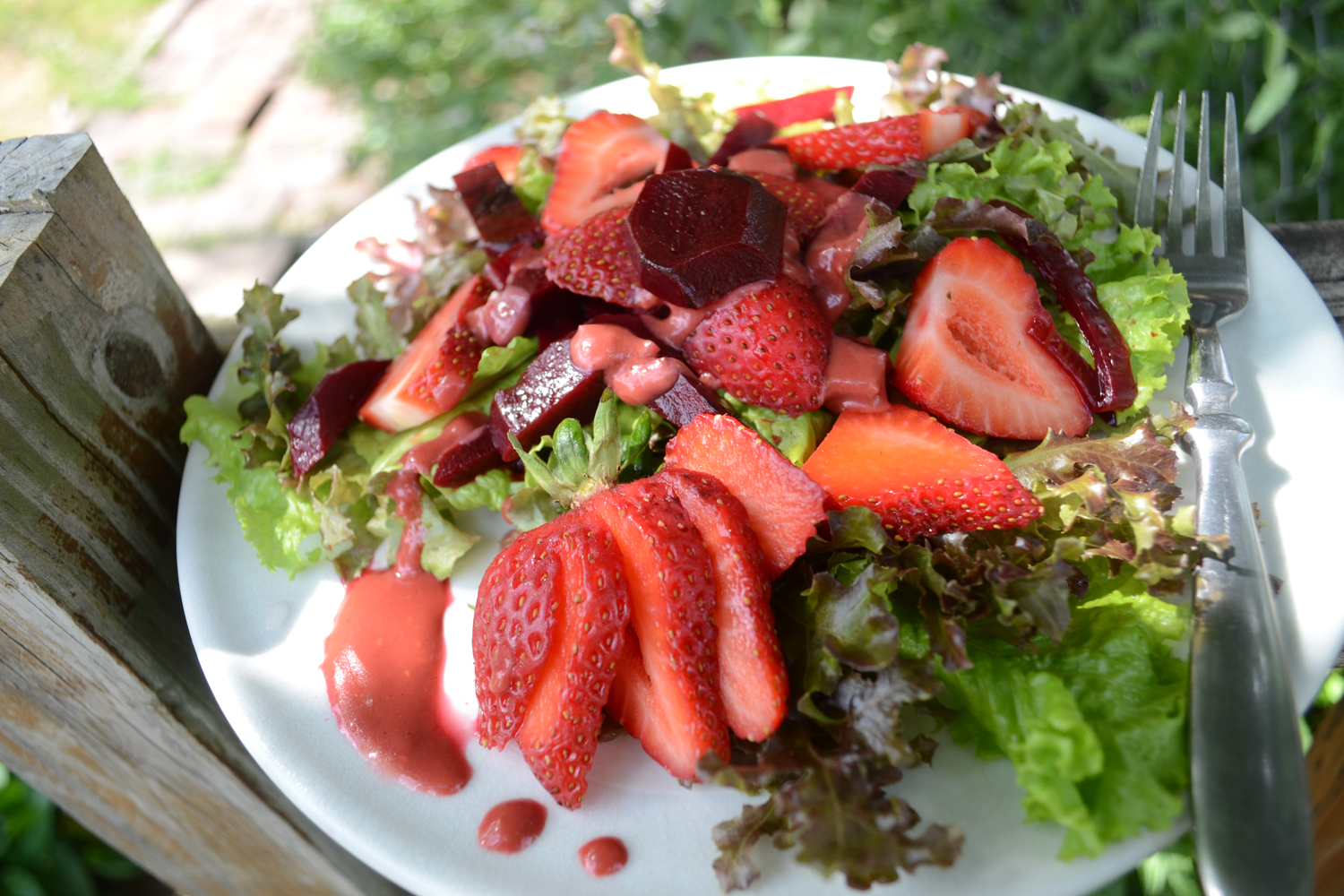
Strawberry and Pickled Beet Salad with Raspberry Balsamic Dressing

Strawberry and pickled beet salad recipe

There's little better way to celebrate the bounty of early summer or to nourish your body than with a bright and beautiful salad.  Enter the Strawberry and Pickled Beet Salad....

As covered in my post 5 Skin Benefits of Eating Salad there's a host of happy results when you fit some fresh fruits and veggies on your plate en masse at least once a day.  Read up and then come on back to make this sweet and unexpected dish.

Since we've already covered the health benefits of salad and beets in particular in other posts we'll get right to the recipe. All the fresh ingredients used are in season in summer meaning you can eat totally locavore for this dish. My spring beets were ready to pick in June, as were the berries and the last of the lettuce.


Strawberry and Pickled Beet Salad with Raspberry Balsamic Dressing


Raspberry Balsamic Vinaigrette Dressing

1 cup fresh or frozen raspberries
½ cup grapeseed oil
¼ cup olive oil
3 TBSP raspberry balsamic vinegar
1 TBSP real maple syrup
1/16 tsp cloves
1/16 tsp allspice
pinch of salt
1 TBSP minced shallot

Puree raspberries in blender or food processor.  Blend in remaining ingredients except for shallot.  Stir minced shallot in by hand.  Stir dressing before adding to salad.

I used di Olivas Raspberry Balsamic Vinegar, which is a very syrupy, thick, sweet vinegar you can practically drink straight.  It is a gourmet vinegar only available at their own store here in St. Louis.  If you can't get a raspberry balsamic in your area then go for the best quality plain balsamic you can get.   The quality of the vinegar will greatly affect the final result of your dressing.


Salad Recipe (per plate or bowlful)

3 cups organic spring mix, red or green oakleaf or other quality lettuce, washed and spun dry
1/2 cup homemade pickled beets (see my recipe)
1 cup sliced strawberries
2 tsp chia seeds (optional)
Raspberry Balsamic Vinaigrette dressing, quantity as desired

Arrange sliced, pickled beets and sliced strawberries evenly over the lettuce.  Sprinkle chia seeds and drizzle dressing on to taste.  Eat and enjoy!


I served this original salad at the 6/21 Dinner in the Garden held in the Blissoma Community Garden and hosted by myself and Jessica Leitch of City in a Jar.  The event was inspired by Jessica Murnane of One Part Plant who has been exciting me with her For Reals Meals series that features collaborations with creative professionals in Chicago, slow food recipes, and general awesomeness.  I'll be posting more of the recipes created just for our Dinner in the Garden/St. Louis For Reals Meals event soon and you can catch the full photo story on both City in a Jar and From the Bathtub.
 

Wednesday, July 31, 2013 in , , , , , , , , , , , , , , ,

A Pickled Beet Surprise - what this root rockstar can offer the health of your skin and body

How beets are good for your health

Beets.  They were one vegetable that despite my mother's "Girl Scout Bite" rule I had never tried even into adulthood.  Why?  For the simple reason that they were never served in my household as a child.  My mom, it turns out, had never liked them and therefore chose never to serve them.  Because I had no habit of eating them and didn't know what to do with them I never specifically chose them despite my longrunning love affair with so many other types of veggies.

Isn't that funny how a simple dislike from one of our parents can result in years worth of stalemate with a new food?  As I have gotten older I have definitely become more adventurous with my eating. I was always interested in ethnic foods and would have told you that I love trying new things.  A simple trip to the big international grocery store in my area taught me about the tiny sliver of foods that I have actually been consuming.  Many of the vegetables there I have never even seen before, much less have any idea how to prepare for a tasty repast.  Lack of knowledge brings hesitation and perhaps avoidance in some cases when new foods are concerned.  My ex would tell you that my first attempt at cooking a Thai soup after becoming enamored with the dish I ate at a local restaurant turned him off Thai for years to come due to my overzealous use of some of the stinkier ingredients.... so in some cases the caution is well advised.

But back to beets.  My first taste of a beet came at the end of a business trip to New York City several years ago.  I had to take the train to Astoria to then take a bus to the airport.  I got off at the last train stop and had time to burn.  I have never been a fan of airport food - too expensive, too limited - and so I made sure to investigate my area for some sustenance prior to departure.  Directly under the train platform I found a tiny, newly opened falafel restaurant.  I adore falafel, especially when it is prepared from a family recipe - oh so tasty!  And bonus, the sandwiches were only $5.  I couldn't believe my luck and promptly ordered my dinner.

Several bites into my intensely delicious meal I noticed something red in my wrap.  What was that?  It was good, whatever it was, and I inquired with the cook.  Pickled beets was the answer.  I was stunned and delighted.  My falafels at home had just found a new accompaniment, one that I never would have chosen on my own.

That sneaky pickled beet that rode in on my sandwich launched a sincere interest in this ravishing root.  I decided that beets most certainly were one thing I would grow.


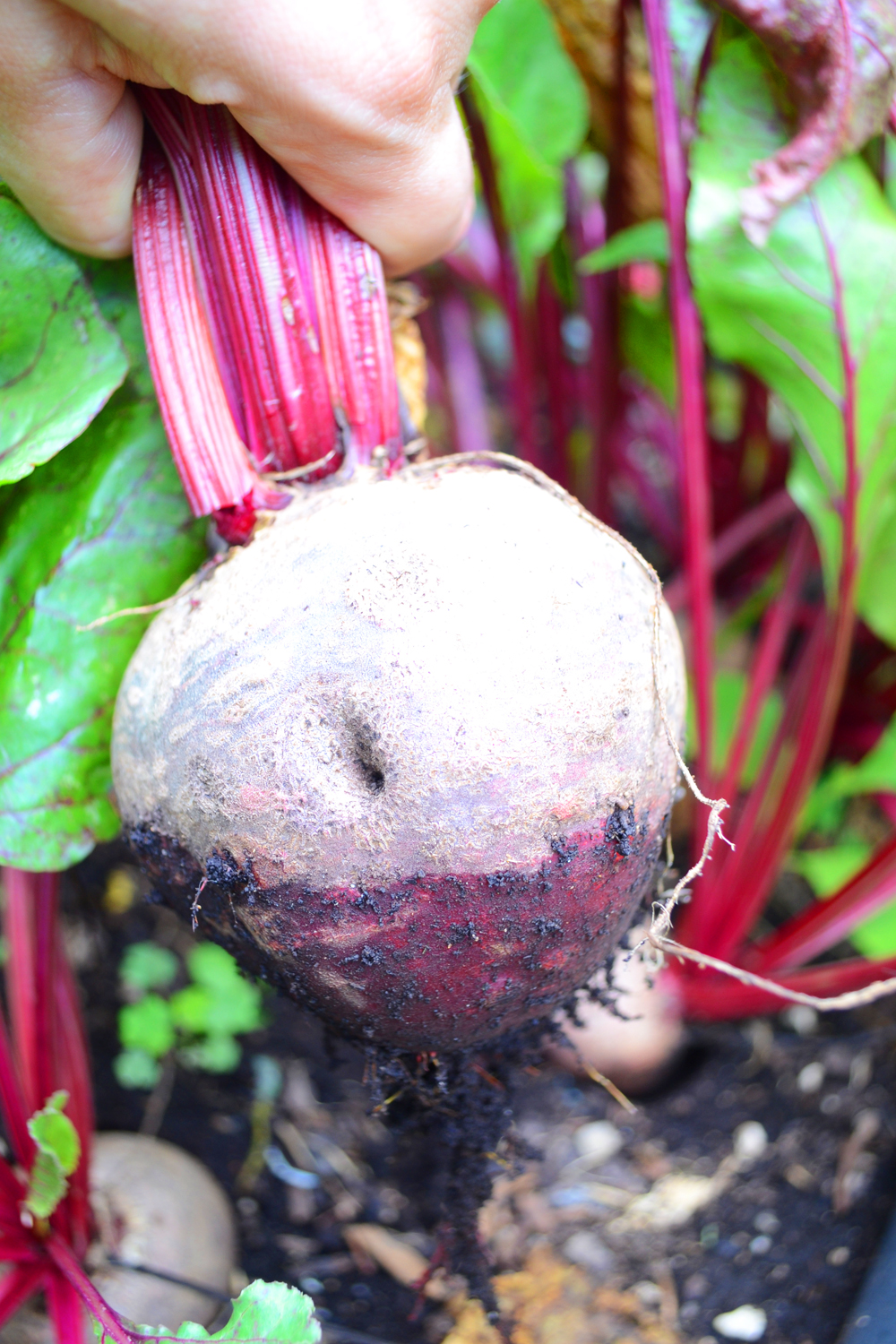
I planted a bunch in the Blissoma comunity garden.  They were ridiculously easy to tend and in a few months we had a bumper crop.  I can vouch that I didn't have a single pest problem with growing these organically (unlike other plants) and they nearly took care of themselves.  As a crop for the budding gardener they are a great bet for a satisfying result.  Unsurprisingly many people, just like me, have not made any habit of eating beets due to unfamiliarity and therefore don't know what to do with them.  I served them to as many friends as possible but still had many left that I couldn't bear to waste.  So like a good thrifty gardener I set about preserving them.


I was longing for that perfect pickled flavor - not too sweet, not too sour, not too salty.  Something you can eat a lot of without puckering or feeling overwhelmed.  As the pickling recipes I found for beets generally included more sugar than I knew I'd like I tampered with one to achieve what has been dubbed truly delicious by the numerous people that have eaten them since.

Since this isn't entirely a food blog, but also a blog about skincare, beauty, and health I'd be remiss if I didn't inform you about the fabulous benefits these colorful veggies bring to your body.  Flavor isn't all you'll get when you venture into the land of beet eating!

Beets are a food generally known in the natural health community for detoxing the body.  Betalains, a special class of phytochemicals found in beets, have been shown to have anti-inflammatory, antioxidant, and cellular cleansing effects.  Betalains are part of the deep pigment you see in beets.  Their concentration is decreased with extended cooking times so if you enjoy beets raw you'll get the maximum benefit.  However we all know that we most readily eat the foods we enjoy so if you like the flavor and texture better when cooked just try to keep your roasting time at an hour or less to avoid degradation of your healing benefits.  A healthy food doesn't do anything for you if you won't eat it because you don't like the preparation!

Beets have benefits for your digestive tract, nervous system, cardiovascular system, and may inhibit cancer cell growth.  The anti-inflammatory benefits are something to truly consider when thinking about skin conditions like acne, eczema, psoriasis, and even just general signs of aging.  Chronic inflammation causes your body's immune system to begin attacking healthy cells.  This can be one cause of degradation of collagen and skin tissues as well as extending to vital organs like the heart.

Psoriasis especially is a disease related to inflammation and improper immune system function.  The immune system begins to attack healthy cells, prompting a buildup of irritated cells as the skin cells attempt to rebuild and reproduce more quickly than they can be shed.  A recent imaging study showed that inflammation is widespread throughout the bodies of people who have psoriasis.  Inflammation was detected in the liver, joints, tendons and aorta.  The anti-inflammatory compounds in beets which inhibit this process by several mechanisms then would be exceptionally helpful in managing the effects of this bodywide problem.

Beets are also a super-rich source of minerals.  They concentrate the minerals found in the ground, many of which are vital for dozens of metabolic processes and reactions in your body.  They give you a great dose of manganese, potassium, magnesium, iron, phosphorous, and copper.

A detoxed body can give you a healthy complexion too.  The raw foodies often expound about how their complexion just seems to glow while eating raw and plant based foods.  This can be partly because a body laden with too many toxins can develop a sallow complexion.  The liver is also responsible for helping process, store, and maintain sugars in the body and if you read my post on how sugar is inflaming and damaging your skin you'll understand how a properly functioning liver can contribute to your good looks.  Prescription and OTC medications are generally metabolized by the liver so our modern use of so many drugs can impact how well our livers are functioning.  Additionally the majority of people that I know do consume alcohol, which is processed by the liver and most people will generally have some load related to alcohol to deal with.  Beets can help keep your liver performing its best through detoxification.

Best ways to eat your beets. 

One simple way is to create a raw juice.  The Heart Fortress beet juice recipe from Young and Raw has got you covered for a basic beet juice recipe.
I've also been mooning over this Beet Tartine with Marinated Caper Berries recipe from My New Roots.  Must try with this year's harvest!
A simple way to serve them is just to roast the beets, salt them, and serve them sprinkled with feta or your favorite nut cheese for a creamy and earthy bite of heaven.
You can also make a tasty soup called borscht.
As I've mentioned they also add a delicious spin to falafel sandwiches!

To add to the mix of options I want to share with you my adapted recipe for pickled beets.  Then next post I'll share with you a recipe for Strawberry and Pickled Beet Salad with Raspberry Vinaigrette that will have your mouth singing happy, beety praises.

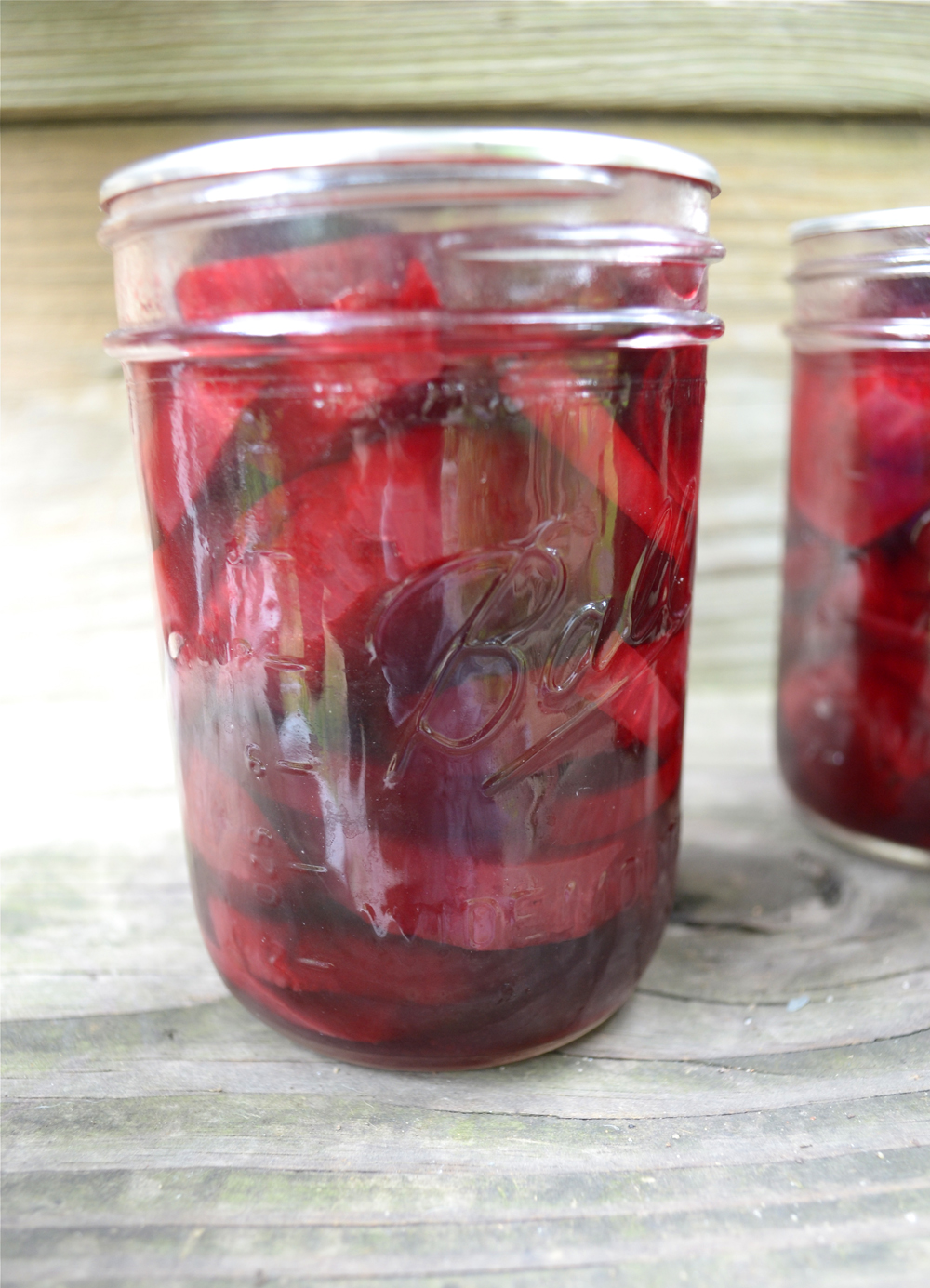
Blissful Pickled Beets recipe

Blissful Pickled Beets

3 quarts beets
4 cups vinegar
4 cups water
1 cup sugar
2 TBSP salt
3 TBSP Pickling spice
Sliced white or yellow onion

Wash beets, oven roast them in foil, peel and slice them.  Try this roasting recipe if you are unfamiliar with how to roast beets.  Set aside.
Combine vinegar, water, sugar, and salt in a pot.  Place pickling spice in a tea ball or muslin bag and add to pot.  Many recipes for pickling spice are available online or you can purchase a blend from the grocery store.  Bring mixture to a boil and reduce heat.  Simmer 15 minutes.  Remove pickling spice.
Pack beets into hot jars layered with onions, leaving ½ inch headspace.  Ladle hot liquid over beets, leaving ½ inch headspace.  Remove air bubbles.  Adjust two piece caps.  Process pints 30 minutes in a boiling water canner.
This recipe can also be used to make refrigerator pickles if you prefer not to hot can them.  Allow to marinate 2 weeks for best flavor, then consume promptly.


homemade pickled beets recipe

Enjoy your foray into the finger-staining adventure that is the beet.  I hope to be hearing that many of you tried adding this many splendored food to your regimen for beauty and health.


Copyright 2011 Blissoma and Julie Longyear. Powered by Blogger.