cleansing

Showing posts with label cleansing. Show all posts. The posts are listed in chronological order. Click the post title to read more.

Thursday, August 1, 2013 in , , , , , , , , , , ,

5 Skin Benefits of Eating Salad


Salad has often gotten a bad reputation.  It is associated with the dieting girlfriend who won't order anything else, the long suffering vegetarian who can't find anything else to eat on a meat-heavy menu, and being used as a precursor to the "real" food in most meals.  Many men wouldn't be caught ordering only a salad when eating out or even eating in.  But all these salad stereotypes fail to celebrate the magnificence that salad is for your body and your health.  What's more a properly structured salad can be the real nutritional powerhouse of a meal, offering a multitude of benefits to your good looks many cooked foods can't claim.

Salads can be artful, flavorful, filling, and insanely nutritious when composed well.  If your only familiarity with salad is iceberg lettuce slathered in a bit of ranch dressing then it's time to up your game with some more creative salad recipes.

Salad is awesome for everything about your health but in terms of a beauty investment this one offers a motherload of benefits for such an easy dietary addition.  Let's investigate the awesomeness hiding in your crisper.

5 Skin Benefits of Eating Salad


1. Salad can increase your hydration level.

Most veggies are majority water, so when you eat them you naturally hydrate your body.  Despite the fact that we know we're supposed to drink a lot of water many people still don't get enough, making consumption of moisture-rich foods a way to add hydration to your system.  When your body is dehydrated so is your skin.  Dehydrated skin can have an increase in roughness, sensitivity, flaking, and fine lines or even cracking.  Both for appearances and comfort and dealing with summer's warm temperatures hydration is required, making fruits and veggies a great way to send your skin the liquid it longs for to perform and look its best.


2. Raw foods in salads mean no loss of vitamins and minerals due to cooking.

When you're eating uncooked foods you're giving your body a shot at the maximum vitamins and nutrients available in many foods.  It's a rare food that remains unchanged by cooking - only certain very stable nutrients don't degrade or migrate out of foods when they're heated.  The actual percentage of raw foods you should consume remains something many experts debate.  Overall though it's safe to say that eating some is one of the best ways to make sure every bite is adding a lot of nutrients to your system.  Raw foods also contain live enzymes that can assist with digestion, something cooked foods don't boast since enzymes are destroyed by heat.


3. Fiber in vegetables and fruits used for salads cleans the intestines and colon, making nutrient absorption more efficient. 

If your intestines are gummed up with gooey, fiber-free, processed foods they aren't going to be properly absorbing nutrition.  Almost every ingredient in a salad contributes fiber that sweeps through the digestive system, carrying leftover gunk with it and leaving intestinal and colon walls free to absorb all the virtuous vitamins you're eating every day.  What good is a nutrient if it never really gets into you?  Not much.  
We're all supposed to get approximately 25 grams of fiber in our diets per day.  Sadly most Americans fall far, far short.  There is a fiber supplement commercial that drives me nuts - they show a woman desperately eating an apple and a bran muffin while trying to exercise and work.  Honestly, it's not that hard to get your fiber when you actually eat fruits and vegetables.  Are we that far gone that we truly think eating an apple is a grueling effort?  Apples are awesome!
2 cups of lettuce equals .9 to 2 grams of fiber depending on the variety with delicate green leaf lettuce ranking lower and the stiff, crunchy Romaine ranking at the 2 gram mark.  Personally when I make a salad for a meal I use at least 4 cups of greens.  If you're making a slaw or salad mixed with cabbage you're adding even more fiber.  2 cups of shredded cabbage adds up to 3.6 grams of fiber.
Other salad additions like carrots, peppers, celery, tomatoes, beets, asparagus, mushrooms, and green peas can really bulk up your fiber intake and also make your salads more interesting.  For a helpful list of fiber in common portion sizes of different vegetables, fruits, and grains check out this PDF.


4. Use of quality oils in salad dressings can improve absorption of nutrients and provide moisturizing, anti-inflammatory omega fatty acids that benefit skin.

This point requires some specificity.  Dressings acquired from most average grocery stores are not going to qualify for this healthy advantage.  That's because they are made with refined canola and soy oils that may be partly rancid, contain pesticide residue, and have no vitamins of their own.  Mass market dressings also commonly contain artificial colors, high fructose corn syrup, and other ickies.  Either make a visit to your local health food store or order up some individual ingredients and make your own unique and healthful dressing instead.
Salad offers the opportunity for culinary use of oils not generally suited for cooking like hemp seed oil, walnut oil, and pumpkin seed oil.  The oils most packed with polyunsaturated fatty acids (Omega fatty acids) are the ones you can't heat because heat makes them oxidize, so cold applications are the best way to get their anti-inflammatory health benefits and delicious flavor.  Organic sunflower and olive oils are fine general purpose choices as well if you don't have specialty oils on hand.
Oils will increase your absorption of beta-Carotene and Vitamin K which are fat soluble.  As much as I enjoy a good smoothie unless folks are remembering to mix in a healthy oil they may not absorb the fat soluble vitamins as well.  This is where salad shines, since dressings usually always use some oil.  A bit of healthy oil can also improve your feeling of satisfaction and how long your energy from the meal will last, since fats take a while to break down into caloric energy.  The veggies will digest first and the fat will fuel you later.
Omega fatty acid rich oils provide balancing, anti-inflammatory effects for skin with positive results for dry skin and acne specifically.  Ironically consuming more Omega 3 fatty acids in healthy oils can make you break out less.

5. Nutrients in salad help synthesize collagen, provide natural sun protective effects, protect against wrinkling and sagging of skin, can improve dark under eye circles, and make skin smoother.  

Let's talk about some of the individual nutrients you get when eating exciting and varied salads.  There's a lot, and their benefits are well substantiated by peer reviewed science!


Carotenoids: 

Carotenoids are a class of compound that includes Vitamin A and all its varied forms.  Carotenoids have antioxidant and anti-inflammatory effects within the body.  Carrots, spinach, tomatoes, romaine lettuce are great sources of carotenoids.  Dark leafy greens are one of the richest sources, so if you're the type that enjoys a massaged kale salad, more power to you.

Carotenoids include beta-Carotene, lycopene, and other compounds like lutein and zeaxanthin.  Many plants that contain one contain numerous of these and a lot of the studies available substantiate the positive effects of the range of carotenoids.

Beta-Carotene:

Beta-Carotene is a form of Vitamin A found in plants and one we think of when we think of orange, yellow and red fruits and veggies.  It is a photoprotective agent and is thought to quench photochemical reactions in the epidermis involving oxygen radicals generated by UV exposure.  While most studies have not found a significant reduction in erythema (sunburn) there was better, more efficient immune system function in relation to sun exposure in individuals supplemented with Beta Carotene in studies.

Here's the bigger benefit for your skin... beta-Carotene was found to inhibit the action of matrix metalloproteinase (MMP)-9, a collagenase enzyme that breaks down the extracellular matrix and collagen, contributing to wrinkling and sagging.  In studies with mice fed dietary beta-Carotene the expression of MMP-9 was suppressed, along with corresponding wrinkles and sagging of skin.  That means you can literally eat your way to firmer, less wrinkled skin when including beta-Carotene rich foods in your diet.


Lycopene:

A significant correlation was obtained between the skin roughness and the lycopene concentration in tissues.  Lycopene levels being high meant smoother skin, lower levels meant rougher skin regardless of the age of the study participant.  Sun dried tomatoes are the food highest in lycopene with sweet red peppers also ranking well, so the extra money you shell out for the ripened peppers may serve your skin extra benefits.  Guavas, watermelon, and pink grapefruit all rank well, so feel free to add fruit to your concoctions.


Sulfur:

Sulfur is known as the "beauty mineral" and is concentrated in skin, nails, and hair.  It must be present for synthesis of collagen.  Get your daily dose of sulfur from onions and broccoli, red sweet pepper and parsely for your salads.  Slice onions thinly, as oxygen exposure allows more sulfur bearing compounds to form.  Raw produce is higher in sulfur than cooked, making salads an ideal way to get your dietary sulfur.


Vitamin K: 

This nutrient pops up in some topical under eye products, but is an under-recognized vitamin in foods.  It strengthens and keeps blood vessels flexible by inhibiting calcium deposits.  It can reduce bruising which is great for people who have eye circles caused by leaky, fragile blood vessels.  It is fat soluble and absorbs when accompanied by some fat.  You can get your Vitamin K in romaine lettuce, broccoli, cabbage, asparagus, and alfalfa sprouts.
(You might want to avoid alfalfa sprouts if you have lupus due to potential complications)


Vitamins C and E:

Dietary consumption of BOTH Vitamins C and E (together, not alone) can show sun protective effects for your skin in as little as 8 days.  4 separate studies have substantiated this effect, albeit at different amounts of vitamin supplementation and different lengths of days taken to establish photoprotective effects.  Participants showed increased resistance to UVB-induced sunburn and protection from DNA damage.   This means by including foods rich in both these vitamins in your diet you are providing yourself the equivalent of internal sunscreen!  Red peppers, citrus fruits, and papaya are tasty sources of Vitamin C, and you can get your Vitamin E through tasty toppings of sunflower seeds, almonds, and other nuts.


Flavonoids:

Flavonoids are fabulous phytochemicals that occur in plants.  You won't find them in meats, so bulk up on the botanicals to get your servings.  A case-control study in an Italian population found a negative correlation between skin cancer and consumption of flavonoid rich foods and beverages like tea.  Best results were obtained with high consumption of vegetables, particularly carrots, cruciferous and leafy vegetables, and fruits, especially citrus.  

So are you convinced to break out your salad spinner with me?  I'm thinking the case for how salad can boost your beauty is compelling, and fully plan to treat my salads as reverently as my serums.  Together they'll go farther!

For some drool-worthy recipes that will have you wondering why you stuck to plain lettuce for so long check out the Salad Recipe page at Young and Raw, and KrisCarr.com where numerous bloggers post their creative contributions.

You can also try my own recipe for Strawberry and Pickled Beet Salad with Raspberry Balsamic Vinaigrette, which comes not a moment too soon - all this writing has made me hungry!


Wednesday, July 31, 2013 in , , , , , , , , , , , , , , ,

A Pickled Beet Surprise - what this root rockstar can offer the health of your skin and body

How beets are good for your health

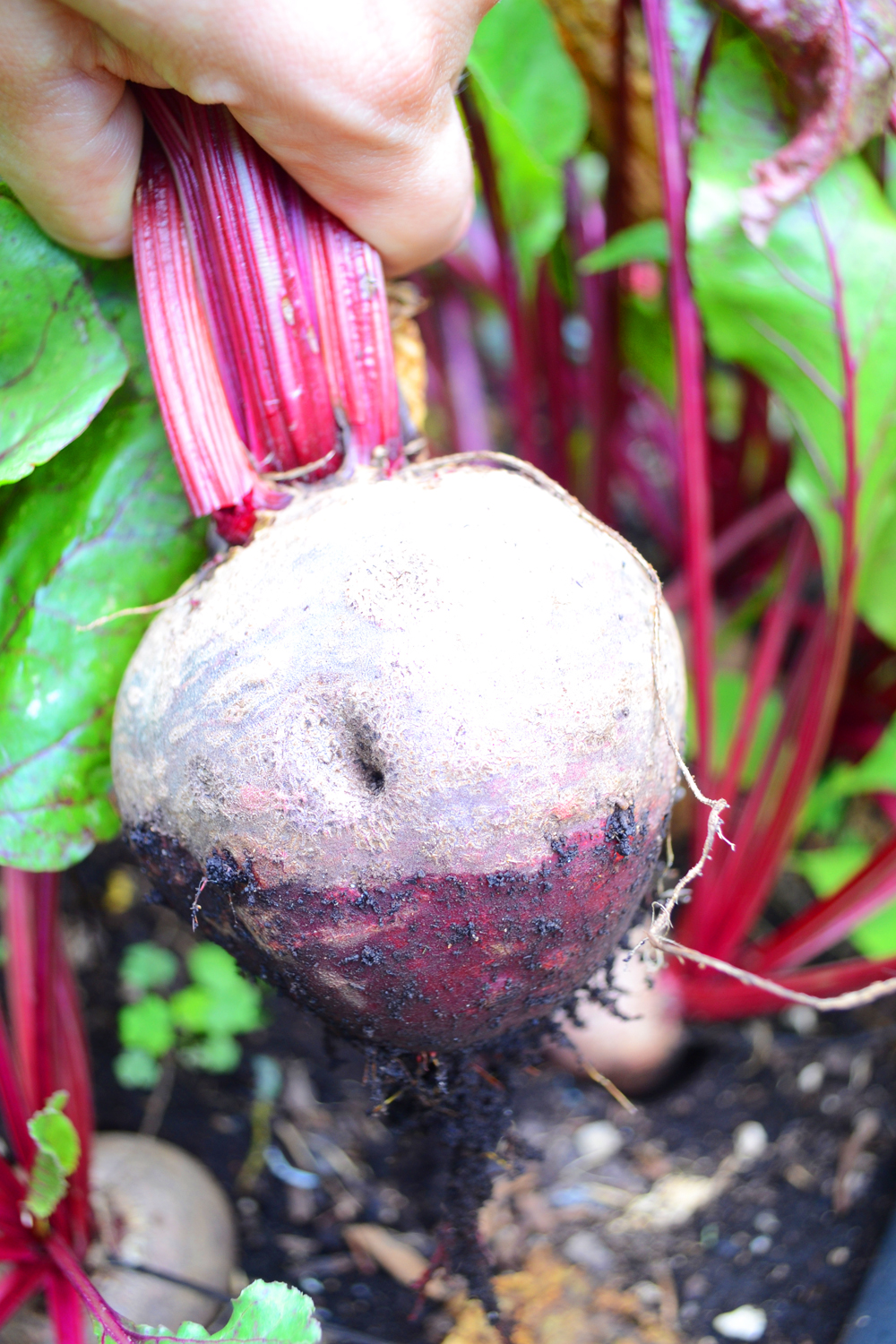
Beets.  They were one vegetable that despite my mother's "Girl Scout Bite" rule I had never tried even into adulthood.  Why?  For the simple reason that they were never served in my household as a child.  My mom, it turns out, had never liked them and therefore chose never to serve them.  Because I had no habit of eating them and didn't know what to do with them I never specifically chose them despite my longrunning love affair with so many other types of veggies.

Isn't that funny how a simple dislike from one of our parents can result in years worth of stalemate with a new food?  As I have gotten older I have definitely become more adventurous with my eating. I was always interested in ethnic foods and would have told you that I love trying new things.  A simple trip to the big international grocery store in my area taught me about the tiny sliver of foods that I have actually been consuming.  Many of the vegetables there I have never even seen before, much less have any idea how to prepare for a tasty repast.  Lack of knowledge brings hesitation and perhaps avoidance in some cases when new foods are concerned.  My ex would tell you that my first attempt at cooking a Thai soup after becoming enamored with the dish I ate at a local restaurant turned him off Thai for years to come due to my overzealous use of some of the stinkier ingredients.... so in some cases the caution is well advised.

But back to beets.  My first taste of a beet came at the end of a business trip to New York City several years ago.  I had to take the train to Astoria to then take a bus to the airport.  I got off at the last train stop and had time to burn.  I have never been a fan of airport food - too expensive, too limited - and so I made sure to investigate my area for some sustenance prior to departure.  Directly under the train platform I found a tiny, newly opened falafel restaurant.  I adore falafel, especially when it is prepared from a family recipe - oh so tasty!  And bonus, the sandwiches were only $5.  I couldn't believe my luck and promptly ordered my dinner.

Several bites into my intensely delicious meal I noticed something red in my wrap.  What was that?  It was good, whatever it was, and I inquired with the cook.  Pickled beets was the answer.  I was stunned and delighted.  My falafels at home had just found a new accompaniment, one that I never would have chosen on my own.

That sneaky pickled beet that rode in on my sandwich launched a sincere interest in this ravishing root.  I decided that beets most certainly were one thing I would grow.


I planted a bunch in the Blissoma comunity garden.  They were ridiculously easy to tend and in a few months we had a bumper crop.  I can vouch that I didn't have a single pest problem with growing these organically (unlike other plants) and they nearly took care of themselves.  As a crop for the budding gardener they are a great bet for a satisfying result.  Unsurprisingly many people, just like me, have not made any habit of eating beets due to unfamiliarity and therefore don't know what to do with them.  I served them to as many friends as possible but still had many left that I couldn't bear to waste.  So like a good thrifty gardener I set about preserving them.


I was longing for that perfect pickled flavor - not too sweet, not too sour, not too salty.  Something you can eat a lot of without puckering or feeling overwhelmed.  As the pickling recipes I found for beets generally included more sugar than I knew I'd like I tampered with one to achieve what has been dubbed truly delicious by the numerous people that have eaten them since.

Since this isn't entirely a food blog, but also a blog about skincare, beauty, and health I'd be remiss if I didn't inform you about the fabulous benefits these colorful veggies bring to your body.  Flavor isn't all you'll get when you venture into the land of beet eating!

Beets are a food generally known in the natural health community for detoxing the body.  Betalains, a special class of phytochemicals found in beets, have been shown to have anti-inflammatory, antioxidant, and cellular cleansing effects.  Betalains are part of the deep pigment you see in beets.  Their concentration is decreased with extended cooking times so if you enjoy beets raw you'll get the maximum benefit.  However we all know that we most readily eat the foods we enjoy so if you like the flavor and texture better when cooked just try to keep your roasting time at an hour or less to avoid degradation of your healing benefits.  A healthy food doesn't do anything for you if you won't eat it because you don't like the preparation!

Beets have benefits for your digestive tract, nervous system, cardiovascular system, and may inhibit cancer cell growth.  The anti-inflammatory benefits are something to truly consider when thinking about skin conditions like acne, eczema, psoriasis, and even just general signs of aging.  Chronic inflammation causes your body's immune system to begin attacking healthy cells.  This can be one cause of degradation of collagen and skin tissues as well as extending to vital organs like the heart.

Psoriasis especially is a disease related to inflammation and improper immune system function.  The immune system begins to attack healthy cells, prompting a buildup of irritated cells as the skin cells attempt to rebuild and reproduce more quickly than they can be shed.  A recent imaging study showed that inflammation is widespread throughout the bodies of people who have psoriasis.  Inflammation was detected in the liver, joints, tendons and aorta.  The anti-inflammatory compounds in beets which inhibit this process by several mechanisms then would be exceptionally helpful in managing the effects of this bodywide problem.

Beets are also a super-rich source of minerals.  They concentrate the minerals found in the ground, many of which are vital for dozens of metabolic processes and reactions in your body.  They give you a great dose of manganese, potassium, magnesium, iron, phosphorous, and copper.

A detoxed body can give you a healthy complexion too.  The raw foodies often expound about how their complexion just seems to glow while eating raw and plant based foods.  This can be partly because a body laden with too many toxins can develop a sallow complexion.  The liver is also responsible for helping process, store, and maintain sugars in the body and if you read my post on how sugar is inflaming and damaging your skin you'll understand how a properly functioning liver can contribute to your good looks.  Prescription and OTC medications are generally metabolized by the liver so our modern use of so many drugs can impact how well our livers are functioning.  Additionally the majority of people that I know do consume alcohol, which is processed by the liver and most people will generally have some load related to alcohol to deal with.  Beets can help keep your liver performing its best through detoxification.

Best ways to eat your beets. 

One simple way is to create a raw juice.  The Heart Fortress beet juice recipe from Young and Raw has got you covered for a basic beet juice recipe.
I've also been mooning over this Beet Tartine with Marinated Caper Berries recipe from My New Roots.  Must try with this year's harvest!
A simple way to serve them is just to roast the beets, salt them, and serve them sprinkled with feta or your favorite nut cheese for a creamy and earthy bite of heaven.
You can also make a tasty soup called borscht.
As I've mentioned they also add a delicious spin to falafel sandwiches!

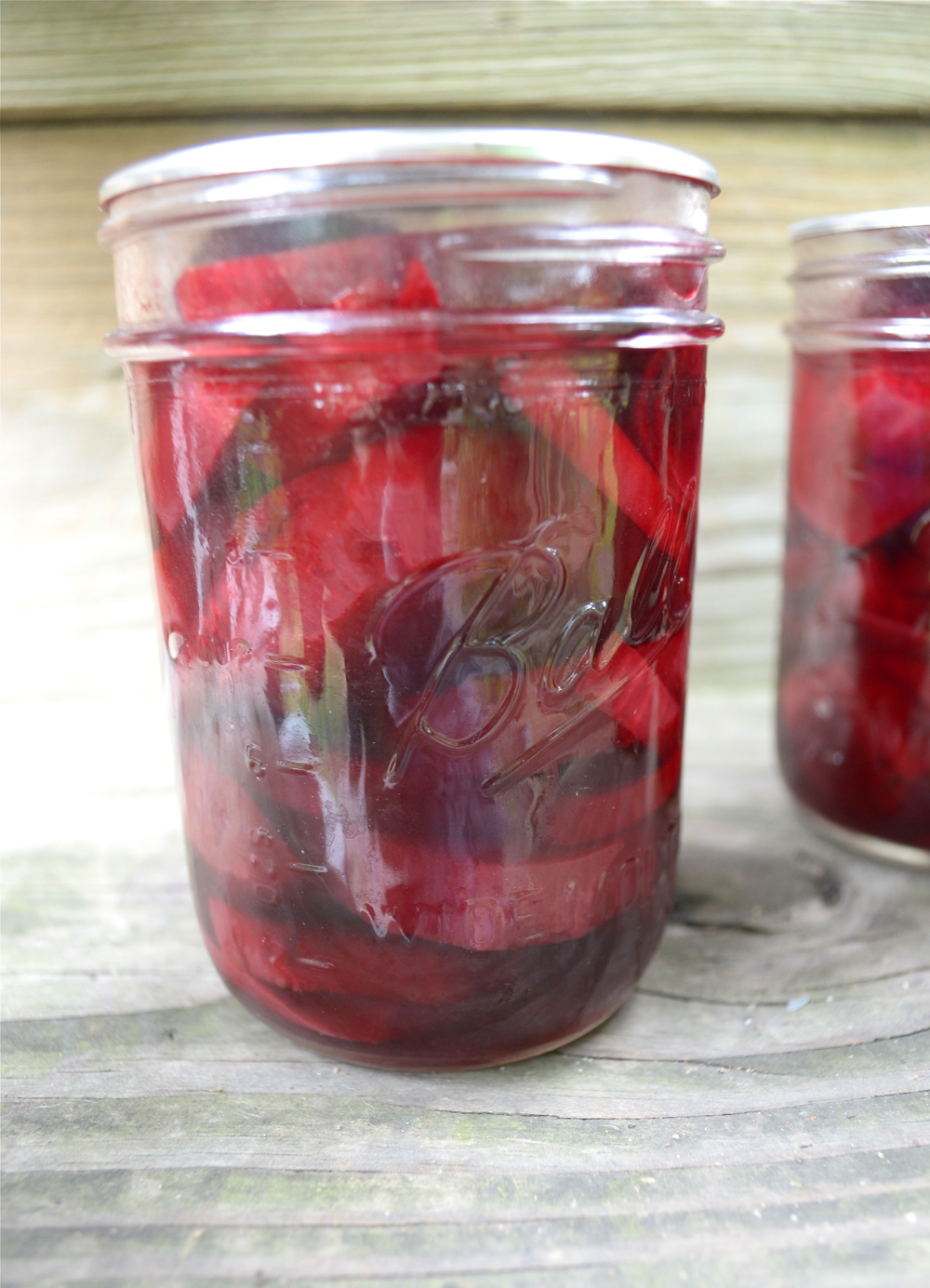
To add to the mix of options I want to share with you my adapted recipe for pickled beets.  Then next post I'll share with you a recipe for Strawberry and Pickled Beet Salad with Raspberry Vinaigrette that will have your mouth singing happy, beety praises.

Blissful Pickled Beets recipe

Blissful Pickled Beets

3 quarts beets
4 cups vinegar
4 cups water
1 cup sugar
2 TBSP salt
3 TBSP Pickling spice
Sliced white or yellow onion

Wash beets, oven roast them in foil, peel and slice them.  Try this roasting recipe if you are unfamiliar with how to roast beets.  Set aside.
Combine vinegar, water, sugar, and salt in a pot.  Place pickling spice in a tea ball or muslin bag and add to pot.  Many recipes for pickling spice are available online or you can purchase a blend from the grocery store.  Bring mixture to a boil and reduce heat.  Simmer 15 minutes.  Remove pickling spice.
Pack beets into hot jars layered with onions, leaving ½ inch headspace.  Ladle hot liquid over beets, leaving ½ inch headspace.  Remove air bubbles.  Adjust two piece caps.  Process pints 30 minutes in a boiling water canner.
This recipe can also be used to make refrigerator pickles if you prefer not to hot can them.  Allow to marinate 2 weeks for best flavor, then consume promptly.


homemade pickled beets recipe

Enjoy your foray into the finger-staining adventure that is the beet.  I hope to be hearing that many of you tried adding this many splendored food to your regimen for beauty and health.


Monday, July 1, 2013 in , , , , ,

The Importance of PH for Skin (and flashbacks to Jr. High chemistry class)


PH is one of those things that many folks may remember from basic chemistry class in Junior High or High School.  It's also one of the things the skincare industry loves to bandy about as a reason to use a toner or to sell you a product that claims to be "PH balanced".  Like many other terms in the skincare industry there is no actual standard for what the phrase "PH balanced" means.  For shoppers that means your best plan is to get a better understanding of this issue so you can avoid discomfort or just being convinced to purchase products that are not ideal for your skin.

From youthful days in middle school you may remember pipettes and putting liquid drop by drop into a beaker to watch for a color shift, telling you the PH had changed.  This is, of course, assuming that you weren't too busy staring at your cute lab partner or daydreaming about pizza, new shoes, or your latest drama with friends (and there was plenty of that).  The very important issues vying for our brain space may have caused some of the chemistry to float out as soon as it was unused.  Not everyone revisited that knowledge in later classes so for the sake of all we'll go over the basics.

PH is a measure of the free H+ or OH- ions running around in solution sending off electronic charges.  You might recall that neutral PH is a 7 on the scale and anything below 7 to 0 is acidic and has H+ (Hydrogen) ions.  Above 7 to 14 is basic or alkaline and has OH- (Hydroxide) ions.  This knowledge is also handy for keeping fish alive in aquariums and growing plants, as water and soil PH can have drastic effects on living things attempting to make a home in either environment.


Your skin has a natural PH of about 4.7 to just under 5.  That is an acidic PH.  Your skin is made up of protein which in turn is made up of amino acids.  There is also a protective acid mantle on the skin that provides you natural defense against your environment.  That means there's at least some happy H+ ions hanging out on your skin.

According to scientific evidence it is beneficial for the good bacteria and flora on your skin as well as keeping skin moisturized to maintain a PH below 5 as much as possible.
 
"Not only prior use of cosmetic products, especially soaps, have profound influence on skin surface pH, but the use of plain tap water, in Europe with a pH value generally around 8.0, will increase skin pH up to 6 h after application before returning to its 'natural' value of on average below 5.0. It is demonstrated that skin with pH values below 5.0 is in a better condition than skin with pH values above 5.0, as shown by measuring the biophysical parameters of barrier function, moisturization and scaling."   Lambers H, Piessens S, Bloem A, Pronk H, Finkel P, 2006


This same evidence shows that your natural defenses are decreased when your skin PH is raised too high.  Another study, The Importance of Skin PH by Gil Yosipovitch, MD and Judy Hu, MD from 2003, found that it can take up to 14 hours for skin to return to normal PH after washing with a soap cleanser.  Skin conditions like eczema, dermatitis, and dry skin can also cause unwanted increases in skin PH all by themselves, which soap only aggravates further.

While your acid mantle is eroded your defenses are down.  That leaves you more vulnerable to acne bacteria, moisture loss, and irritation.

While Blissoma does make 2 soap bars that are designed to be mild enough for facial use the fact remains that anyone with an irritated skin condition or who is prone to acne should use a low PH, non soap cleanser.  I generally recommend our soaps to younger individuals or just to people who have resilient skin.  If you are not prone to irritations, dryness, acne, dermatitis, or eczema then you should be able to use a bar soap without trouble.

However, if you do have skin that is prone to any of these irritated conditions you should use our Fresh Mild Rice Cleanser or Free Rejuvenating Herbal Gel Cleanser for best results.  These cleansers are both acidic PH of about 4.5, perfect to keep your skin at the acid PH it loves.

All of Blissoma's moisturizers are made with a skin-friendly acidic PH as well to work with your acid mantle and replenish hydration.

Cleansing with soap based cleansers is one of the primary things unfortunately going wrong in the natural skincare world.  While natural liquid soaps can be wonderful products for cleaning your home and even your hands they are not ideal for your face.  You may be surprised what a simple switch to a PH correct cleanser can do to heal your skin.  Acne can be reduced just by this simple switch.

So what about that toner the lady at the department store counter is trying to sell you to "correct" the PH of your skin after toning?  Can a toner do that?  Well, sortof.  Applying an acidic product will help urge your skin back towards a happier, acidic PH if you've just used a basic cleanser or if you are located in an area with high PH water.  Quite frankly, though, nothing can replace your actual acid mantle except your own skin working hard to restore itself.  It's ideal to avoid disturbing it at all when you have irritable skin.


If you are going to use a soap is there a reason to choose a bar soap over a liquid soap?  Yes, there is.  Natural bar soaps are more superfatted than liquid soaps, which means they have extra oil in them that was not made into soap by the lye reaction.  This extra oil helps deposit nourishment as the bar cleanses.  Blissoma's facial soaps also contain portions called "unsaponifiables" which are fatty portions of the oils that cannot be made into soap and come from solid oils like Shea Butter.  These are calming and emollient for skin.  Unsaponifiables cannot be used in liquid soaps as they would still be solid or would cause cloudiness.  This is one way bar soaps are superior for moisturizing skin versus a liquid natural soap.

Cleansing in particular is one of the steps of skincare routines that is frequently done improperly.  People think washing their skin is no big deal.  Many people think moisturizer must be much more important since it is on for longer.  Unfortunately this is just not true.  If you are cleansing your skin in a way that is incompatible with your PH balance needs you are upsetting your skin for the whole day to come.  Your moisturizer cannot fix that.  


Your overall skin comfort and  health will be dramatically improved if you cleanse in a way your skin can tolerate.  For many people this means transitioning off of soap and onto acidic PH cleansers.  This is especially true for your face, which is much more delicate skin than much of the rest of your body.  You may still be able to get away with using a good quality natural soap to cleanse your body but receive dramatic benefits when you use a non-soap cleanser on your face.

Oil Cleansing Method would qualify as a routine that doesn't damage your acid mantle.  It uses clean oil to lift dirty oil from your skin, and since oil is made up of fatty acids that acid aspect makes it really friendly. It's not ideal for everyone though, so the good news is that most gel and cream cleansers also fall into the non-soap cleanser category.  Some people even debate the worthiness of cleansing with water at all - which in some ways is understandable if your water PH is an 8 as that would indeed be irritating.  I'm a big fan of cleansing though as a good bit of gunk can build up on your face day in and day out.  I just like to do it with a product that is soothing, not stressing, and I'm personally a twice a day girl to maintain my skin's brightness and comfort.

I hope this information helps you transition to a happy PH for your skin.  Let me know if you try switching to a skin-friendly non-soap cleanser and the difference it makes for you.
 

Wednesday, February 8, 2012 in , , , , , ,

Consult the Herbal Chemist - Acne Rescue Au Natural Part 2

Everyone wants to know what will work to solve their difficult acne problems. There's no one magic bullet but you can have a big effect on your biology and environmental factors through what you do. Changing your behavior may make a big change for your skin.


A successful acne remedy generally involves a whole lifestyle approach. Using the right skincare matters but it is also about the foods you are eating and your stress levels. For ideas on how you can start to revamp your eating habits see Part 1 of this series. Going organic and plant-based in your diet is a huge step in the right direction and your total health will also improve as a result. There's so much more to cover with the internal/external health link but today is about how you can simply and effectively treat your acne using skincare methods and products on the exterior. Here's the third step in my recommendations for natural acne prevention and treatment.


3. Use a gentle, natural cleansing routine daily to exfoliate, balance sebum, kill bacteria, and maintain proper PH.

Exfoliation
Exfoliation is a big skincare buzzword, but what is it and why do it?

Skin cells replicate and die off each day as part of the skin’s natural repair and growth cycles. The dead skin cells may slough off but some individuals’ skin may not maintain itself as efficiently. This causes buildup of dead skin cells on the surface and can cause a dull appearance, patchy and flaky areas, and clogged pores. The skin replicates less efficiently as individuals age and regular but gentle exfoliation can help maintain a smooth, fresh, bright appearance. A clogged pore is a pore likely to get a pimple, so helping your skin with its daily renewal is a great idea.


Exfoliation can be done manually with a mild abrasive, but a gentler way to go at it can be enzymes such as Bromelain from Pineapple, Papain from Papaya, and even Kiwi Fruit juice will dissolve dead skin cells. A mild acid like the Beta Hydroxy Acid salicylates in Willow Bark will dissolve dead skin cells too. Even just using a terry washcloth to gently wipe your face while removing your cleanser can provide benefit. Over-exfoliation is not a good thing and gentle is the key word for good results. Take it easy on yourself.

Environmental pollutants and occlusive moisturizing agents like petroleum oils can also block pores so cleansing helps remove these external factors as well as your own dead skin cells.


For the best in gentle and effective exfoliation some people swear by a fun little gadget called the Clarisonic.It has a brush head that gently polishes away dead skin cells. It's a strictly manual method that uses no chemicals at all, and Terri Bly of The Nature of Beauty calls it "the perfect facial cleansing and exfoliating system".

How does it work?
Terri says, "Using ultrasonic technology, the facial brush uses a sonic frequency of more than 300 movements per second to remove 6X more makeup and 2X more dirt and oil than cleansing with your hands alone. Even better, it does so without irritating the skin." For more compelling, complimentary information on the Clarisonic see her article "Why you should have a Clarisonic". It can be used alone with warm water or with your favorite herbal cleanser for added benefits.

Balancing Sebum
Sebum, your natural skin oil, protects the skin and creates what is known as the acid mantle. The acid mantle is hostile to many types of bacteria. It also serves as a food and breeding ground for other types of bacteria though, such as Propionibacterium Acnes, the bacteria responsible for acne lesions. When sebum levels are overly abundant the bacteria have a ready supply of food, leading to growth. Ideally sebum levels should be enough to provide comfort and protection but not feed bacteria. Daily cleansing with gentle products can remove excess sebum and still leave skin conditioned and comfortable.


Kill/Discourage Bacteria Populations
The first route by which cleansing discourages bacterial buildup is by physically removing anything deposited on the skin through your environment (dirty hands, fabrics and air) and by removing excess sebum that serves as food for bacteria, as mentioned above. The second route can be by actually killing bacteria using herbs, oils, or other medicines. I prefer a strictly botanical approach.


Many natural acne products concentrate on Tea Tree oil due to a proven antibacterial fraction in the oil called Terpen-4-ol. It does directly kill acne bacteria. However, it can also be quite drying and for some people Tea Tree oil prompts allergic reaction.


Most essential oils have antibacterial qualities and are highly mobile into skin, which make them uniquely suited to natural acne treatment.
They discourage bacteria on the surface and work against bacterial growth inside pores. For common antibacterial essential oils that may help manage acne more gently than Tea Tree oil try Lavender, Rose, Palmarosa, Geranium, Cedarwood, Myrhh, Bergamot, and Frankincense.
For more specific recommendations on these and other essential oils from respected herbal and essential oil expert Jeanne Rose see her article "Antibacerial/Acne-Fighting Essential Oils".

Tea Tree oil is suitable mostly for acne in teen and young adult skin types. I would not recommend Tea Tree oil for anyone above the age of 25 due to excessive drying and potential for irritation. Take care with essential oils and always dilute them well before use.


Maintain Proper Skin PH
Your skin is made of proteins. The building blocks for proteins are amino acids. Notice the word acid there. Your skin is naturally acidic with a PH of somewhere between 4 and 6. 7 is neutral PH and anything above 7 is basic.
Many people are damaging their naturally acidic skin PH by using alkaline cleansers. Once the acid mantle is removed or compromised your skin's defenses are down and acne bacteria can flourish. A typical soap cleanser will have a PH of 9 or 10 - solidly alkaline. Some people have more resilient skin than others and may rebound quickly from washing with an alkaline cleanser. Some lucky people have other genetic factors that contribute to a lack of acne bacteria growth. But for those who are exceptionally PH sensitive or have a propensity for acne this PH change can be disastrous.


According to a paper titled The Importance of Skin PH by Gil Yosipovitch, MD and Judy Hu, MD from 2003 it can take skin up to 14 hours to return to normal PH. That means if you are washing twice a day with a soap cleanser your skin may never be reaching optimal PH, leaving you vulnerable to acne bacteria ALL THE TIME. Wow! That is a skincare juggernaut as far as I'm concerned. Acne is not the only detrimental effect from skin PH being too high. Some people may simply be experiencing dryness or discomfort, so proper PH isn't just for acne sufferers. Increased skin PH is also related to other disturbed skin conditions like eczema and dermatitis.


If you're using a soap-based cleanser and have acne problems stop now and switch to something with an acidic PH that will not damage your acid mantle.


How can you tell if a cleanser is a good PH for you? Unfortunately many of the natural facial cleansers that are available, even liquid cleansers, are soaps. Look for "liquid castile soap" or "saponified oils of" in the ingredient declaration. Other ways it may be listed is "Sodium Cocoate", "Sodium Olivate", "Potassium Cocoate", "Potassium Olivate" or potentially as just botanical oils and then Sodium Hydroxide or Potassium Hydroxide.

Cream cleansers, oil based cleansers, and those using mild glucoside cleansers like cocoglucoside and decyl glucoside would be something to look for instead. I still have my personal preferences even within PH correct cleansers but the point is to help you make an educated decision about what product is right for you.


None is what I'm saying is meant to speak badly overall of natural soaps. Natural soaps are wonderfully simple products and generally toxin-free, which is how they've made their way so well into the routines of many natural and organic lifestyle lovers. However, when I get a client who tells me they've used many natural skincare lines and are still having no luck with their persistent acne a non-soap cleanser is the first thing I recommend. Change your cleanser and see what happens for you. Improper PH may be the culprit.

A cleanser to try that would be correct PH, soap-free, and the pinnacle of clean ingredients would be Intelligent Nutrients Certified Organic Anti-Aging Cleanser.


As evidence of what the right, non-soap cleanser can do for acne-prone skin check out this proud, bare-faced Twitter post from one of our fans of Fresh Mild Rice Cleanser.

Also watch this video from ILuvJesse444 who thought she had oily skin with her acne but it turns out a cleanser switch to a non-soap made all the difference.


Cleansing is incredibly important and the right cleansing routine can change your whole skin condition.
Make the commitment to find the proper cleansing routine for YOU and the benefits will come. Whether it's the Clarisonic, an essential oil, or a cleanser product something is out there that will set your skin up for success.

I'll be back tomorrow with some moisturizing, spot treatment, and mask ideas to finish off. Stay tuned!


Copyright 2011 Blissoma and Julie Longyear. Powered by Blogger.