gourmet

Showing posts with label gourmet. Show all posts. The posts are listed in chronological order. Click the post title to read more.

Wednesday, October 9, 2013 in , , , , , , , , , ,

White Bean and Snap Pea Salad with Yogurt Miso Sauce - from Dinner in the Garden


Snap peas are one of my favorite things about gardening in the cooler seasons of the year.  My daughter will eat them raw as I pick them.  I like them blanched and as a carrier for various sorts of dips or in green salads as a sweetly substantial crunch with my greens.

I devised this recipe back in June when we had a bumper crop.  It was served at the Dinner in the Garden / For Reals Meals event to great acclaim by the attendees.  Now that the weather is cooling again snap peas will be in season and you can prepare this for any upcoming gatherings of your own.

The snap peas used for the dinner event were all from the Blissoma community garden.  There were a LOT this spring so I was scheming constantly on ways to put them all to good use.

The Yogurt Miso Sauce could be made with soy yogurt but I had the worst time finding any even in health food stores in St. Louis.  Consequently I used an organic, humane goat milk yogurt instead.  It seems all the soy yogurt around me was replaced by just coconut yogurt, which was sweet (I tried it just in case) and totally unsuitable for this recipe.  It was one of the only recipes for the entire dinner that ended up not vegan.  Fortunately many people digest goat milk better than cow milk, and it is generally not factory farmed which eliminates many of the environmental and gustatory concerns related to dairy.


I wanted a really savory, tangy sauce and this particular mixture turned out to be insanely delicious on crackers and just as a dip for other veggies too. The miso and white truffle oil add layers of flavor that bloom in the mouth as each bite goes down.  I'm getting hungry just thinking about it.  Make sure you buy an organic miso paste or read labels very carefully as otherwise you're likely to end up with unwanted MSG, which is common in many mass produced misos, or since it is a soy product anything non organic is likely GMO.  Even most of the miso pastes at my local asian market are packed with MSG.  I had to get the cleaner version from an independent, locally focused grocery store.  The miso paste is usually salty and provided all the salt this sauce needed.  If you find yours needs a little more you could add a splash of soy sauce or a sprinkle of sea salt.

White Bean and Snap Pea Salad with Yogurt Miso Sauce

Yogurt Miso Sauce

1 quart plain goat milk yogurt or plain, unsweetened soy yogurt

4 Tbsp white miso paste (organic, MSG free)
2 large cloves garlic, minced or crushed in garlic press
2 Tbsp fresh dill, chopped
4 tsp white truffle oil
2 Tbsp olive oil
1 tsp toasted sesame oil

Mix all ingredients and allow to sit for several hours in the refrigerator to blend the flavors.


White Bean and Snap Pea Salad

6 cups fresh snap peas
1 lb dry white cannellini beans
Yogurt Miso Sauce
Optional: quality blue cheese or feta cheese for sprinkling on top

Soak and cook cannellini beans according to package directions (beans are generally an 8 hour overnight soak, rinsed, and then boiled until soft).  Drain and set aside.

Blanch snap peas by placing in boiling water for 1 minute, then quickly drain and rinse in cool water to stop cooking.  Allow to cool.  Cut each snap pea in two sections and remove any tough tips from either end.  

Mix beans, snap peas, and yogurt miso sauce.  Serve chilled.
If you don't mind dairy then the addition of a little blue cheese or feta was an amazing added flavor.  I ate many of my leftovers topped with it as a treat.  The tangy and pungent flavors of both these cheeses was delightful.  Feta was a little more overpowering, oddly enough.  The blue blended in more seamlessly and had a creamier texture with each bite.  Depending on the effect you want either could work.

I know my cohost Jess is going to be excited to finally see this recipe posted and hopefully you'll find it to be a palate pleasing delight as well.  It's a dish that can help you easily enjoy seasonal eating.  More peas, please! 


Thursday, August 1, 2013 in , , , , , , , , , , , , , , , , ,

St. Louis Dinner in the Garden with City in a Jar - inspired by One Part Plant "For Reals Meals"


Regular readers and Blissoma fans know that we are creating a community garden in North St. Louis City.  It's big and we're hoping to make a big impact for our community and their involvement with healthy, organic foods and herbs.

Part of my goal this year was to start bringing more people into the garden either through volunteer time or events.  I delivered fliers around the neighborhood and hosted the first group work day in the garden in late spring.  Neighbors I'd never met before came and learned about what's happening on our plot. 

More events were on tap, and after seeing the For Reals Meals series by Jessica Murnane on One Part Plant I decided that St. Louis definitely needed to host a copycat event.  They say imitation is sincere flattery and Jessica proved her colors when she offered 100% enthusiasm to the idea of her concept spreading to other cities.  Done! 


The season was perfect to have it outdoors in the lush June garden and feature as many locally procured and garden grown ingredients as possible.  Jessica Leitch of City in a Jar became my cohort since I am notoriously unable to focus on anything but food when planning a dinner.  If it was left up to me folks would have been eating with fingers, though the food would have been delicious.  Thank goodness I had help then with the table settings, bartending, flowers, and hosting.


We invited some neato people in the St. Louis scene, splitting the invite list between us equally.  I reached out to local filmmaker Ken Calcaterra, city government employee and fellow foodie Vincent Haynes, and Cbabi and Reine Bayoc of the famed vegan eatery SweetArt.  Jessica invited her photographer Christopher Willingham who shot all the photos in this post, her videographer, and several other friends.


At 6 pm on the first day of summer the guests began to descend on the garden.  I had planted, weeded, tended, and put in great efforts to make sure the garden was in spiffy shape for the evening.  The garden gods smiled on me and didn't let the weeds, bugs or heat get too far ahead of me.

Jess bartended while I was holed up in the kitchen completing the meal.  Afterwards Vincent told me he'd never consider having a dinner without a co-host again, as it solves the notoriously difficult problem of how to entertain guests while cooking food.  A buddy makes it possible!


We set things up picnic style on low tables with blankets.  It was casual but a memorable dining experience.


Recipes for Dishes from Dinner in the Garden

 - Lavender themed cocktails made with lavender simple syrup and 360 Vodka (Jess declared her favorite to be the Lavender/Lemon variation on a Lavender Collins) 
- Strawberry and Pickled Beet Salad with Raspberry Balsamic Vinaigrette Dressing
- Creamy White Bean and Sugar Snap Pea Medley
- Sweet Potato Oven Fries with Crumb Coating and Homemade Heirloom Ketchup
- Panfried Polenta with Garden Herbs and Raw Mustard Greens Pesto

and a gluten-free baklava with coconut ice-milk for dessert


All recipes were original concoctions and featured ingredients harvested from the garden to show off the work we've been doing to grow fantastic food.  I'll gradually be posting all the recipes over the coming weeks so everyone can enjoy these healthy and super tasty creations.  With the exception of the white bean salad and baklava all recipes were vegan, and all of them were gluten-free.

Everyone enjoyed their evening.  I was glad I completed dinner by only 30 minutes after the estimated serving time (phew!) and that everything turned out well.  I'm working on some tweaks to the desserts as both weren't as fine as I'd like for sharing with the whole world, but they tasted good that night.

By next year I hope to have a full size farm table made from donated, reclaimed wood to serve on for many future events.  Thanks to both the Jessicas for their contributions!  I highly suggest following One Part Plant on culinary adventures through Chicagoland as you're sure to find something delightful.  We were honored to replicate her concept and instigate a little happy mixing of people and plants in North St. Louis.  We've got a lot growing up here.


in , , , , , , , , , , , , ,

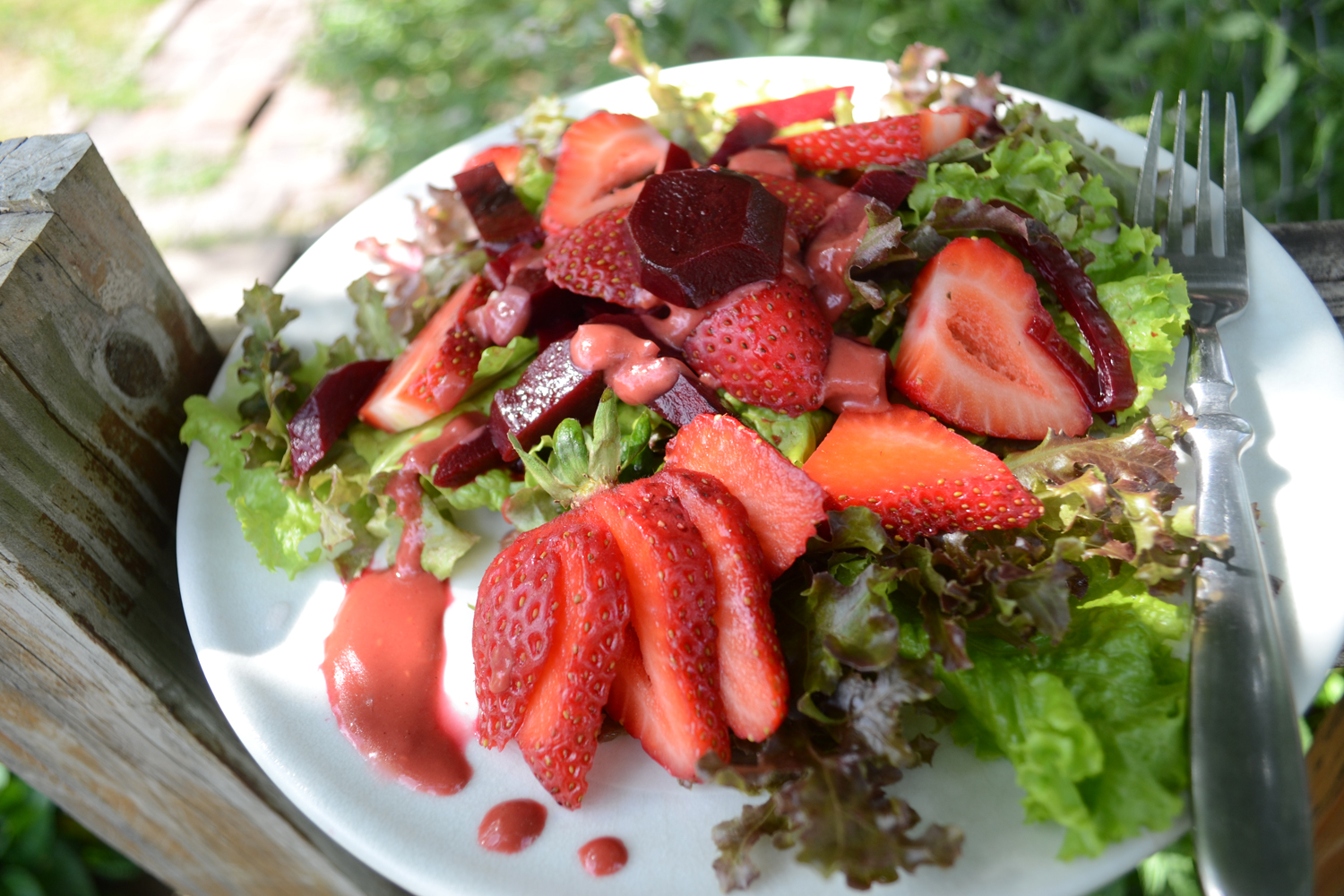
Strawberry and Pickled Beet Salad with Raspberry Balsamic Dressing

Strawberry and pickled beet salad recipe

There's little better way to celebrate the bounty of early summer or to nourish your body than with a bright and beautiful salad.  Enter the Strawberry and Pickled Beet Salad....

As covered in my post 5 Skin Benefits of Eating Salad there's a host of happy results when you fit some fresh fruits and veggies on your plate en masse at least once a day.  Read up and then come on back to make this sweet and unexpected dish.

Since we've already covered the health benefits of salad and beets in particular in other posts we'll get right to the recipe. All the fresh ingredients used are in season in summer meaning you can eat totally locavore for this dish. My spring beets were ready to pick in June, as were the berries and the last of the lettuce.


Strawberry and Pickled Beet Salad with Raspberry Balsamic Dressing


Raspberry Balsamic Vinaigrette Dressing

1 cup fresh or frozen raspberries
½ cup grapeseed oil
¼ cup olive oil
3 TBSP raspberry balsamic vinegar
1 TBSP real maple syrup
1/16 tsp cloves
1/16 tsp allspice
pinch of salt
1 TBSP minced shallot

Puree raspberries in blender or food processor.  Blend in remaining ingredients except for shallot.  Stir minced shallot in by hand.  Stir dressing before adding to salad.

I used di Olivas Raspberry Balsamic Vinegar, which is a very syrupy, thick, sweet vinegar you can practically drink straight.  It is a gourmet vinegar only available at their own store here in St. Louis.  If you can't get a raspberry balsamic in your area then go for the best quality plain balsamic you can get.   The quality of the vinegar will greatly affect the final result of your dressing.


Salad Recipe (per plate or bowlful)

3 cups organic spring mix, red or green oakleaf or other quality lettuce, washed and spun dry
1/2 cup homemade pickled beets (see my recipe)
1 cup sliced strawberries
2 tsp chia seeds (optional)
Raspberry Balsamic Vinaigrette dressing, quantity as desired

Arrange sliced, pickled beets and sliced strawberries evenly over the lettuce.  Sprinkle chia seeds and drizzle dressing on to taste.  Eat and enjoy!


I served this original salad at the 6/21 Dinner in the Garden held in the Blissoma Community Garden and hosted by myself and Jessica Leitch of City in a Jar.  The event was inspired by Jessica Murnane of One Part Plant who has been exciting me with her For Reals Meals series that features collaborations with creative professionals in Chicago, slow food recipes, and general awesomeness.  I'll be posting more of the recipes created just for our Dinner in the Garden/St. Louis For Reals Meals event soon and you can catch the full photo story on both City in a Jar and From the Bathtub.
 

Tuesday, March 12, 2013 in , , , , , , , , , , , , , , ,

Cooking with Essential Oils - A Complete Guide to the "Essence of Flavor"

Photo by Jonathan Gayman
Most people have never cooked with essential oils either due to lack of familiarity, lack of access, or the common repetition by many aromatherapy sources that say not to ingest them.  One secret of the food industry is that essential oils are used ubiquitously in packaged foods as a source of extra flavor.  Anyone consuming canned, frozen, or even boxed foods is almost assuredly already eating essential oils and a large list of essential oils is approved by the FDA for consumption as safe.  While they are potent, and best used with care my personal feeling is that people are missing out on an amazing sensory experience skipping these ingredients in their cooking.  

To help you venture into the world of essential oils for your home cooked meals I put together a complete guide to cooking with essential oils with the help of Feast Magazine St. Louis.  Armed with a little knowledge you can begin to have all kinds of exotic flights of flavor fancy.  The story below includes links to 6 recipes I created from scratch for the article to help you make 4 complete courses all devised for maximum aromatic impact.  Enjoy, and please let me know if you try them!

From Feast Magazine St. Louis, February 2013 
Essential oils are most commonly associated with candles, fragrances and beauty products. However, the volatile oils produced by plants, their roots and their fruits are the building blocks upon which we create flavor in cooking. We grind herbs in a mortar and pestle when making vinaigrettes to extract the rich oils. We zest lemons and limes for the concentrated flavor found in the oils of their skins. So why don’t most people cook with bottled essential oils? Many oils available on the market aren’t intended for consumption. But seek out those essences made for cooking and you’ll open your kitchen to a whole new world of flavor.

Cooking with essential oils is simply another way to season dishes, much like using spices and herbs. But they bring with them a number of benefits. Most notably, the concentration of flavor. Oftentimes just one drop of essential oil is enough to infuse an entire dish with flavor. No picking, peeling, chopping, grinding or grating necessary. The distiller has already done all the work for you by presenting the volatile oils in their straight form. And unlike with dried herbs or ground spices, shelf stability isn’t a concern. Essential oils are not vulnerable to bacteria and don’t go rancid like vegetable oils might. Some oils can change a bit over time or oxidize, but in general, essential oils keep for years.

If the oils are purchased from a reliable source, quality and freshness of flavor are unmatched. Essential oil suppliers grow specific varieties of plants and use the best growing conditions to maximize the aromas in the plants they harvest. The plants are sent straight to distillation to capture their true profile, and distillers are careful not to compromise the quality of their oils with heat or other factors. In addition, one can access varieties of plants and unusual flavors that are simply not available in other forms. Neroli, for example, is the bitter orange flower. It’s very famous in perfumery and is only available as an oil. Bitter orange flowers are not sold for use, and even if they were, the aroma is so delicate and transient that by the time the blossoms reached you it would have deteriorated.

So how do you begin working with these intense and intriguing oils? Start by substituting them for the herbs and spices in your favorite recipes, keeping the following guidelines in mind.
Essential oils are oil-based and will dilute well in alcohol, vinegars, oils and fats. These elements need to be present in the recipe you’re using. Foods that are naturally rich in fat, such as dark or rich meats, fatted dairy products and coconut milk, work well. Starchy vegetables, beans, lentils and grains can also distribute the oils well enough if they’re also blended with a little cooking oil. Stews and chunky, thick soups are a good place to start, and dips, pestos and creamy sauces are the perfect testing ground for working with essential oils.

Essential oils are quite potent. If following a recipe, you can use the ratio of 1 Tbsp dried herb = 3 Tbsp fresh herb = 1 drop essential oil. If you need to use less than one drop in a recipe, dip a toothpick in the oil and swirl it into the dish. Essential oils can also be diluted with food-grade oils. Create 50 percent, 25 percent or 10 percent dilutions for use in smaller batches of food. If you’re experimenting on your own, start slowly by adding one drop at a time. Taste the dish and adjust the seasoning based on your preference.

Essential oils will “flash off.” With extended heat, so using them in cold applications is a wonderful way to get the maximum benefit. Using a small amount in olive oils and vinegars as a final dressing to foods works well. If using them in soups and sauces, add them at the last possible step, when heat exposure is minimal. Baked goods obviously will be exposed to heat, so some loss may occur. Consider increasing the amount of essential oils used in baked items to ensure the final product will still have lots of flavor.

Tips are included in the link to Feast's website including a list of good oils to start with and ones to avoid to help guide you through cooking with essential oils.   Visit their site to see my list of recommended and favorite oils.

And, check out a collection of recipes linked below that feature a variety of essential oils in a number of applications.  Each recipe was devised by myself through my 10+ years of experimenting with oils in my herbal studio and home kitchen.  Flavor is really my strength and while I may not have all the skills of a gourmet chef I can season a sauce and achieve something that will really please a palate.  Several recipes are vegan and numerous are gluten-free for my followers that pursue alternative food lifestyles.


Photo by Jonathan Gayman
Triple Celery Soup (Vegetarian and Gluten-Free)
This delectably creamy soup offers a full, savory taste built on a bevy of veggies. Celery root, celery stalks and potato make a satisfying base, while white wine and apple lend a pleasant sweetness in the mouth. Celery leaf extract, parsley and the unusual touch of star anise create an aromatic treat that will have you taking your bowl back for seconds.

Coriander and Pink Pepper Flatbread (Vegan and Gluten-Free)
These crunchy flatbreads don't disappoint. Whole spelt flour creates a healthy base for a subtle but insistent blend of coriander and pink pepper. Horseradish loses its bite in the baking process but provides a full, mellow undertone.

Whiskey, Fenugreek and Fig Balsalmic Chicken Wings
Take wings in a sophisticated direction with a smoky, spicy marinade and syrupy molasses and balsamic reduction. The whole dish will have you smacking your lips and licking your fingers for the last drops of the delicately flavored sauce. Jicama sticks soak up the sweet stuff and offer a clean, satisfying crunch between bites of fragrant meat.
 
Cumin, Apricot, and Grapefruit Braised Winter Vegetables (Vegan and Gluten-Free)
This tasty vegetable dish is thoroughly infused with the bright flavors of apricot and grapefruit, which contrast nicely with earthy cumin essence and saffron. It's an unexpected combination but an irresistible one.
Photo by Jonathan Gayman

Raspberry, Rose, and Neroli Coconut Ice Cream (Vegan and Gluten-Free)
A dairy-free, rosy dessert that cleanses the palate and offers an inviting combination of fruit and precious flowers. Super-simple preparation but a big wow factor for flavor. Altogether a singularly intriguing and elegant dessert experience.


Rose, Ginger, and Assam Tea Cookies (Vegetarian)
These turbinado sugar-topped cookies offer a crunch that makes a delightful companion to ice cream. The decadent Ginger Aftelier Chef's Essence dominates on the tongue with a hint of rose otto flitting about in the background. This buttery, classy take on a shortbread makes fine friends at a luncheon or tea or as a snack or dessert.

Following is a list of essential oils used as food flavorings that are GRAS by the FDA.  See the original list including latin names on their site.

Alfalfa, Allspice, Almond - bitter (free from prussic acid), Ambrette seed, Angelica root, Angelica seed, Angelica stem, Angostura (cusparia bark), Anise, asafetida, Balsam of Peru, Basil, Bay leaves, Bay (myrcia oil), Bergamot (bergamot orange), Bois de Rose, Cacao, Chamomile flowers  (Hungarian, Roman, and English), Cananga, Capsicum, Caraway, Cardamom seed, Carob bean, Carrot, Cascarilla bark, Cassia bark (Chinese, Padang, Batavian, and Saigon), Celery seed, Cherry wild bark, Chervil, Chicory, Cinnamon bark (Ceylon, Chinese, Saigon), Cinnamon leaf (Ceylon, Chinese, Saigon), Citronella, Citrus peels, Clary Sage, Clover, Coca (decocainized), Coffee, Cola nut, Coriander, Cumin, Curacao Orange peel, Cusparia bark, Dandelion root, Dog grass (quackgrass triticum), Elder flowers, Estragole (esdragol, esdragon, tarragon), Estragon (tarragon), Fennel sweet, Fenugreek, Galanga, Geranium (East Indian and rose), Ginger, Grapefruit, Guava, Hickory bark, Horehound, Hops, Horsemint, Hyssop, Immortelle, Jasmine, Juniper berries, Kola nut, Laurel (berries and leaves), Lavender, Lavender spike, Lavandin, Lemon, Lemon Balm, Lemongrass, Lemon peel, Lime, Linden flowers, Locust bean, Lupulin, Mace, Mandarin, Marjoram sweet, Mate, Melissa (lemon balm), Menthol, Menthyl acetate, Molasses extract, Mustard, Naringin, Neroli bigarade, Nutmeg, Onion, Orange bitter (flowers and peel), Orange leaf,  Orange sweet (flowers and peel), Origanum, Palmarosa, Paprika, Parsley, Pepper (black and white), Peppermint, Peruvian Balsam, Petitgrain (lemon, mandarin, and tangerine), Pimenta, Pimenta leaf, Pipsissewa leaves, Pomegranate, Prickly ash bark, Rose absolute, Rose otto and attar of roses, Rose (buds, flowers, fruit/hips), Rose geranium, Rose leaves, Rosemary, Saffron, Sage (officinalis, Greek and Spanish), St. John's bread, Savory (summer and winter), Schinus molle, Sloe berries, Spearmint, Spike lavender, Tamarind, Tangerine, Tarragon, Tea, Thyme (white, wild or creeping), Triticum (dog grass), Tuberose, Turmeric, Vanilla, Violet (flowers and leaves), Violet leaves absolute, Wild Cherry bark, Ylang-ylang, Zedoary bark

Questions?  Comment and I'll be happy to reply with answers to guide you.

Article originally published in the February 2013 issue of Feast Magazine.  Story and recipes by Julie Longyear, dishes prepared by Angela Komis. 
 

Copyright 2011 Blissoma and Julie Longyear. Powered by Blogger.